Multiple Trips, One Lighthouse, and a Beach That Goes On Forever
There are places you visit once and consider yourself done with. Cape Lookout is not one of them. Between 2020 and 2021, I went back three times — each time finding a different way in, and a different version of the same island. The lighthouse was always there, standing at the southern tip of South Core Banks like it has since the 1850s, but the experience of getting to it changed everything about how it felt.
Here's what I learned: the way you arrive at Cape Lookout is the trip.
The First Time: Coming by Ferry
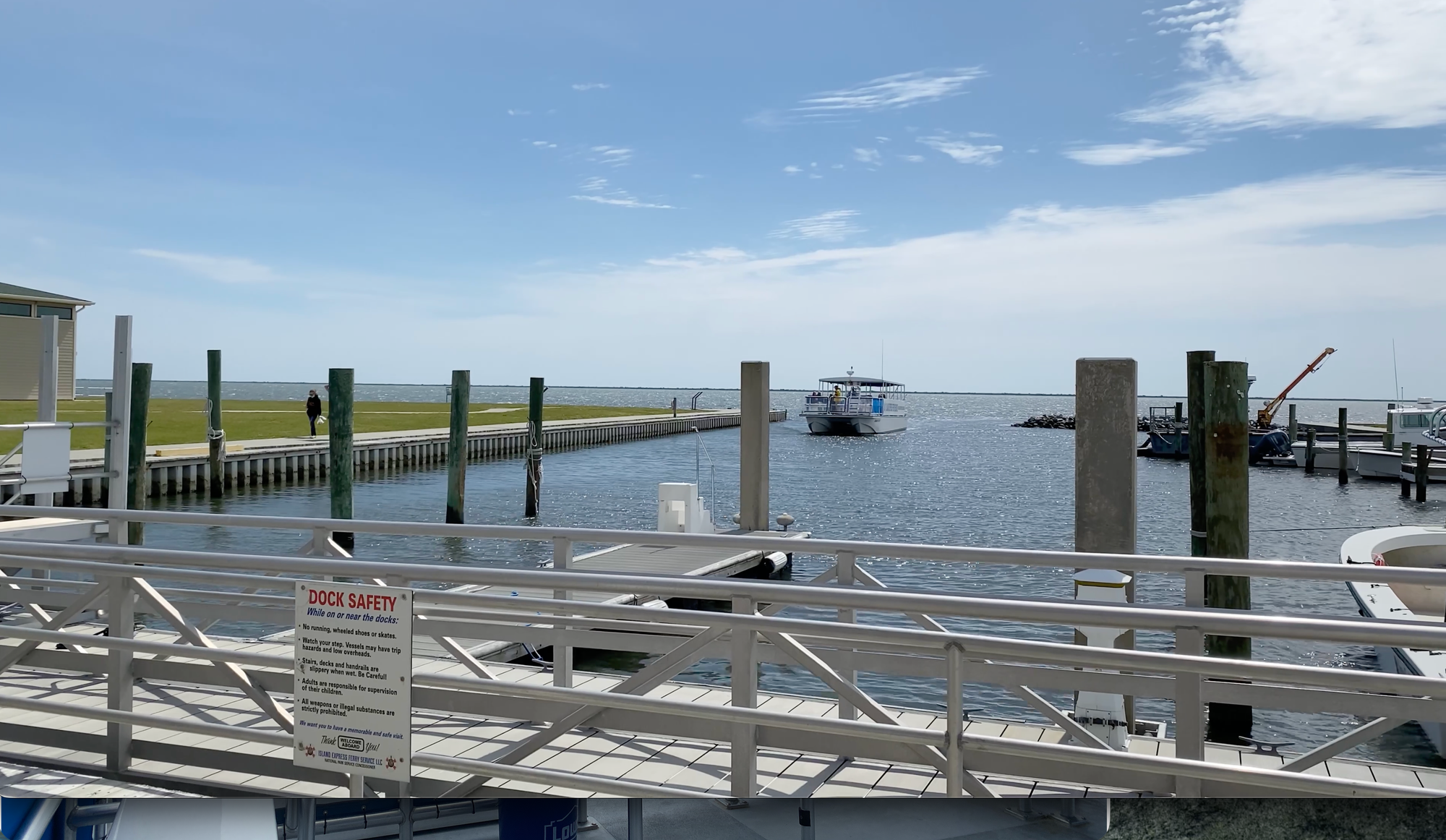
The most accessible version of Cape Lookout starts at Harkers Island, where Island Express Ferries runs passenger service across the sound to the national seashore. No car, no gear hassle, no ORV permit. You show up, you get on a boat, and roughly twenty minutes later the Cape Lookout lighthouse slides into view across the water.
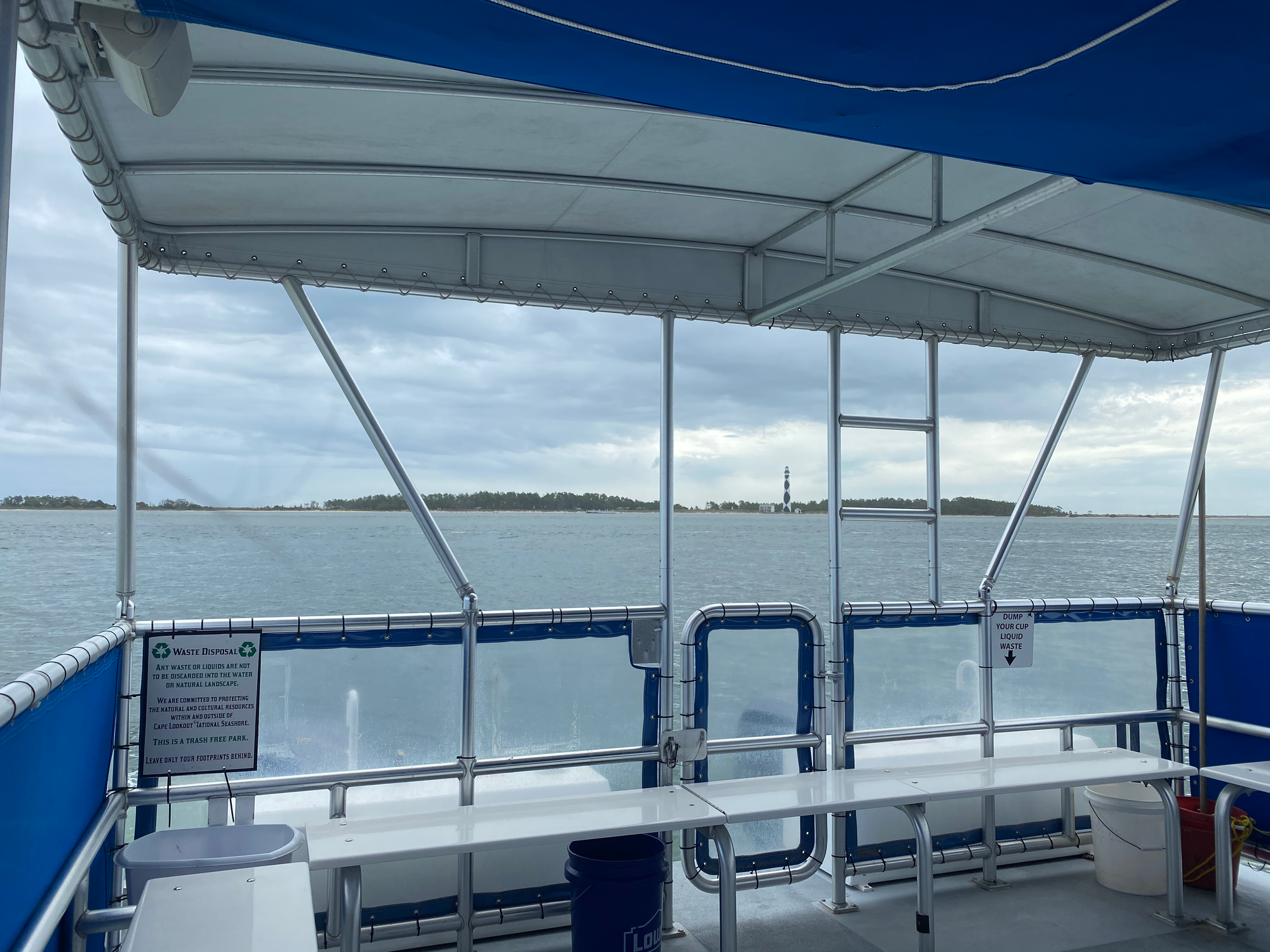
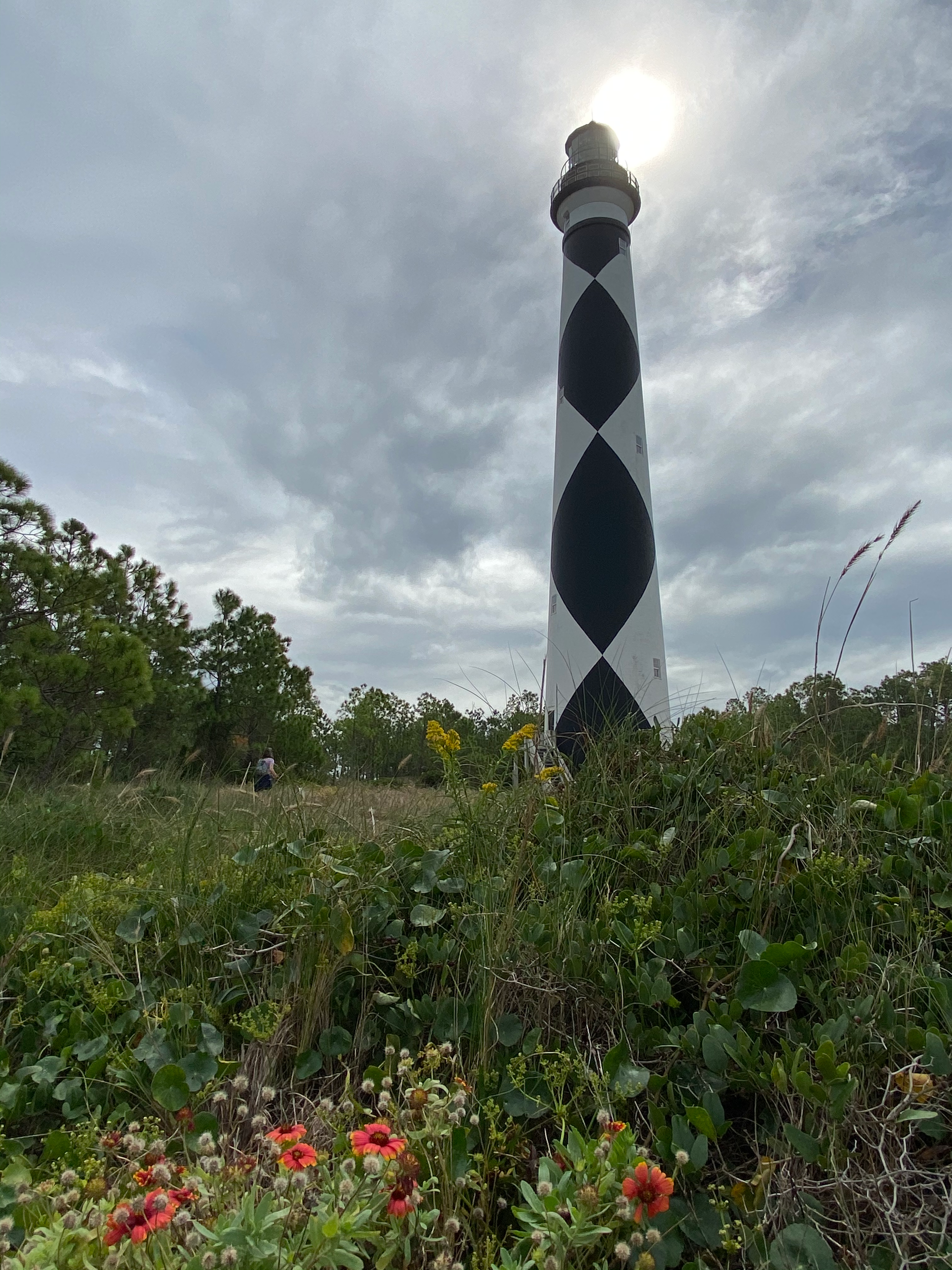
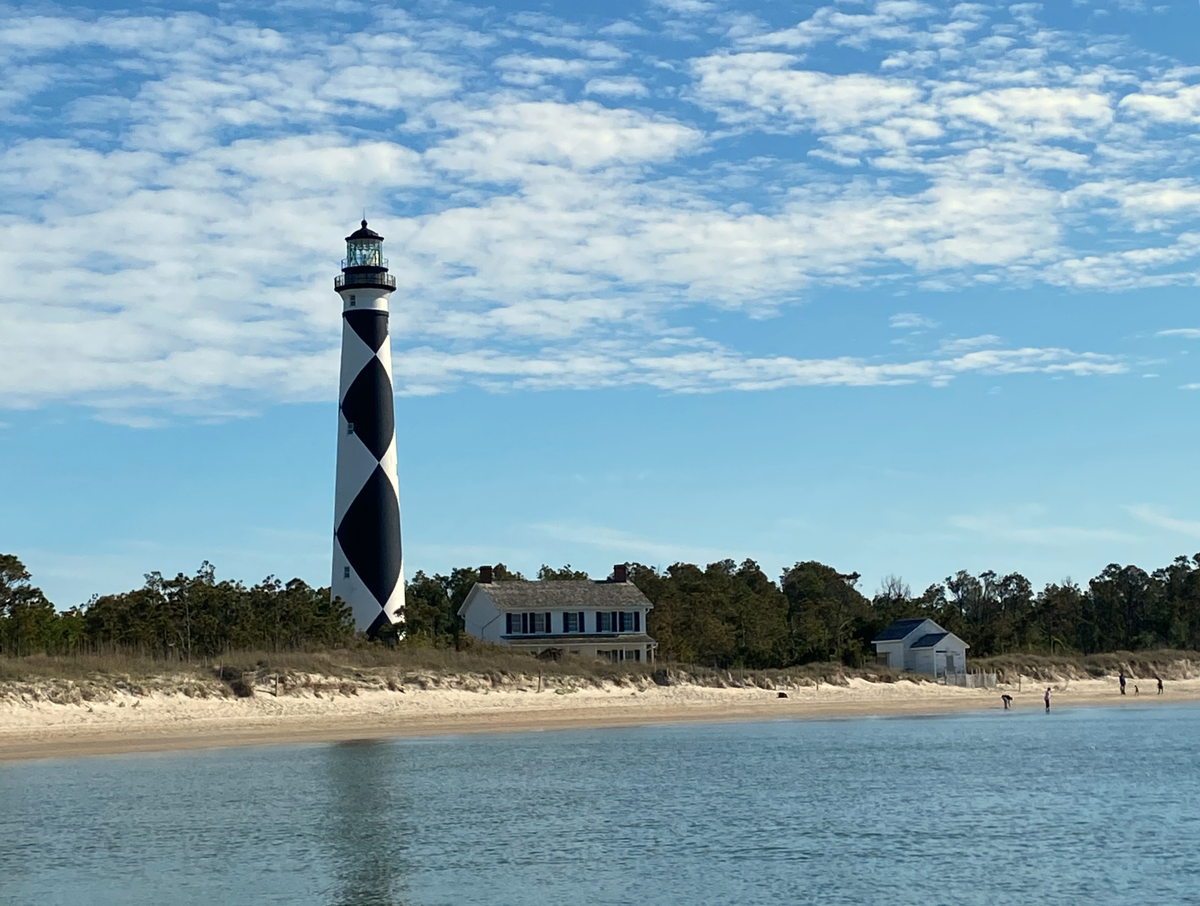
That first glimpse is the moment. The lighthouse is 163 feet of black-and-white diamond-patterned brick, built in 1859, and it looks exactly as serious as you'd expect something that's been warning ships off this coastline for over 160 years to look. The pattern — unique among North Carolina's seven lighthouses — makes it unmistakable from miles away. From a boat at close range, it's genuinely impressive.
Once you disembark at the pier, the lighthouse keeper's historic home serves as a small museum with exhibits on the history of the light station and the people who tended it. It's worth thirty minutes of your time and puts the scale of the lighthouse in better context. The keeper's house is also where you get the best ground-level photos — close enough to take in the full height, far enough back to get the framing right.
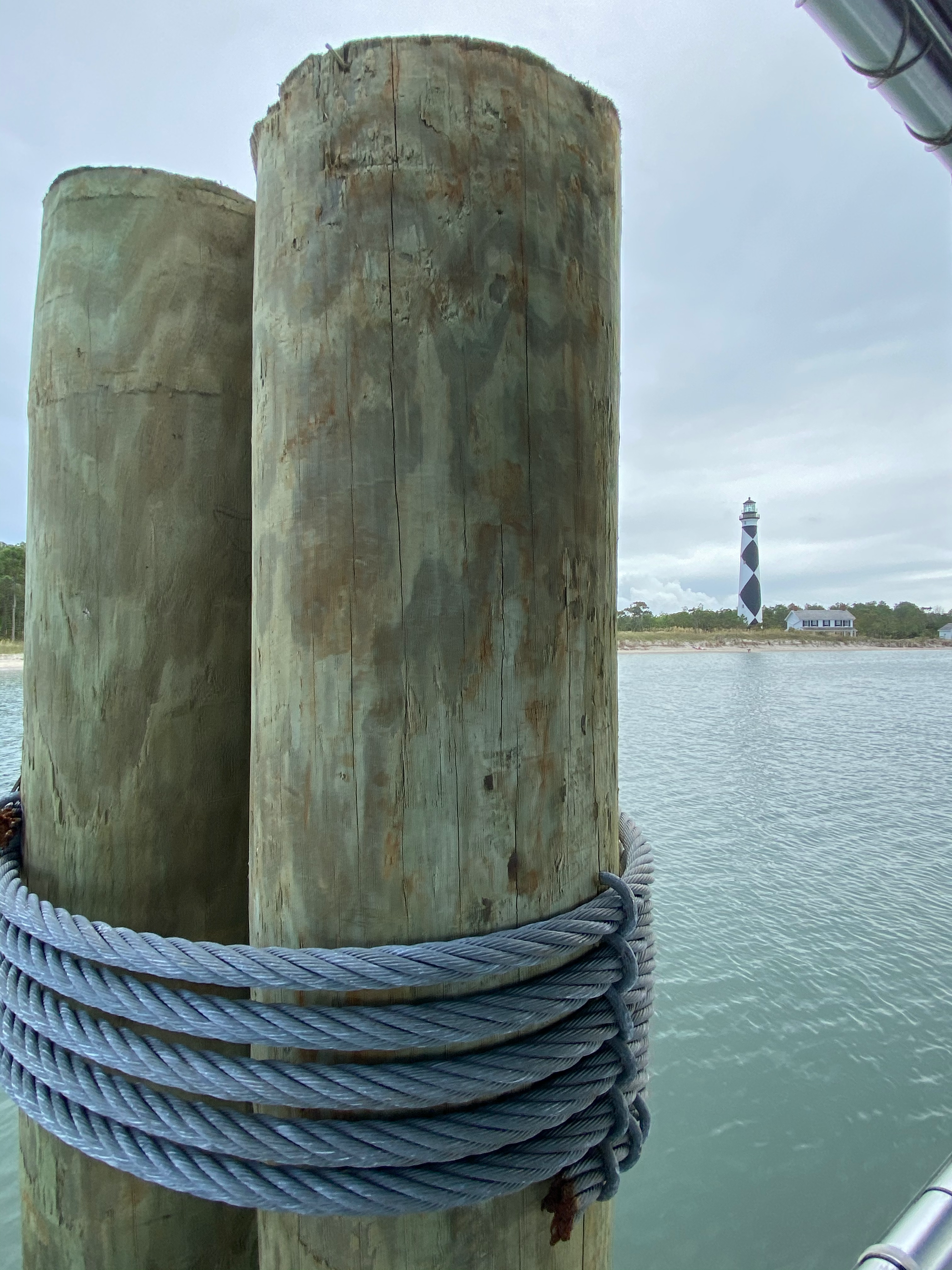
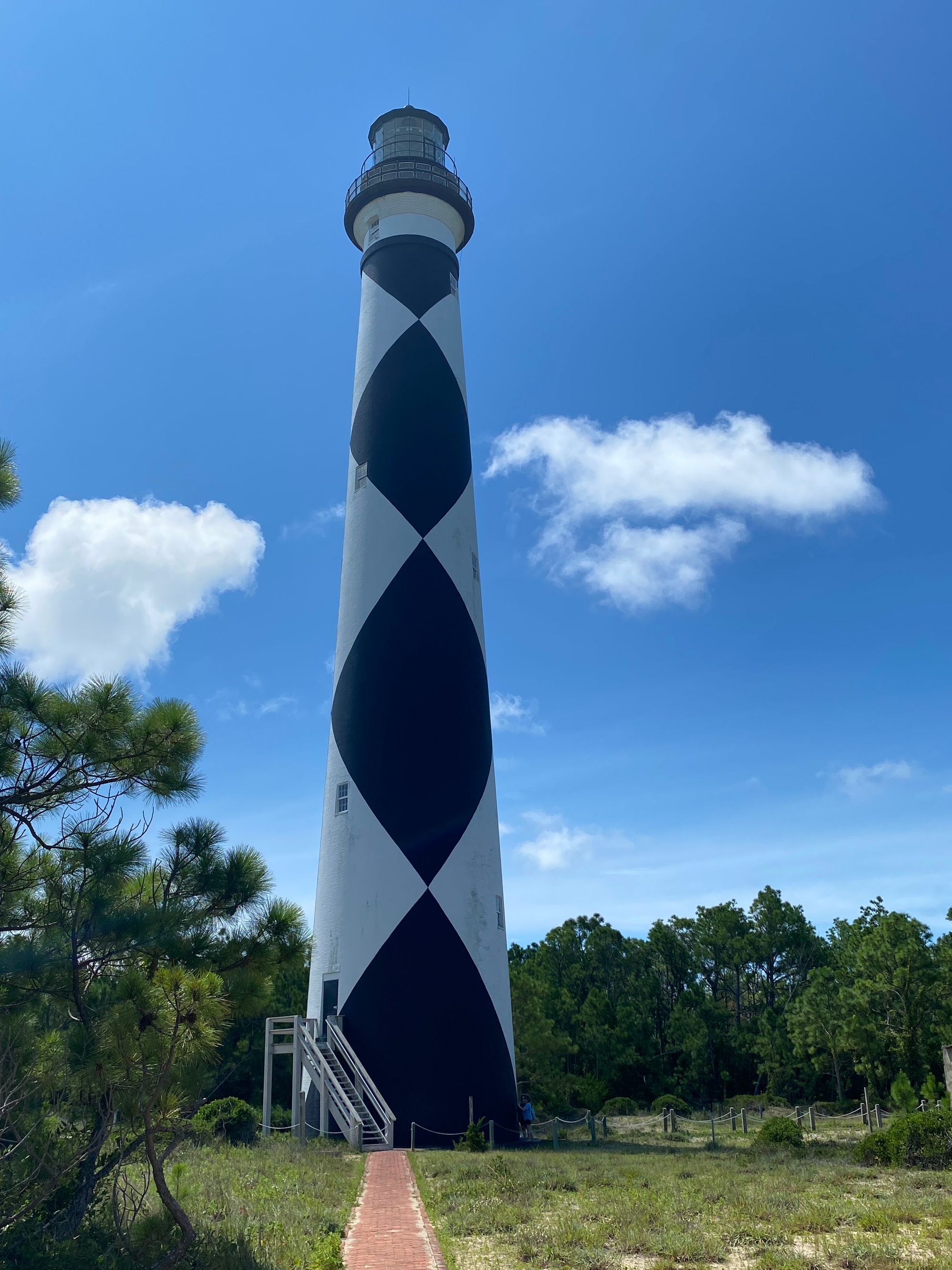
From there, the island stretches north and south. Most day-trippers drift toward the lighthouse, take their photos, and set up on the beach nearby. That's fine. But the real character of Cape Lookout sits at the southern tip — at the Point, where the Atlantic meets the sound and the shelling gets serious.
On shelling: The Point earns its reputation. Lightning whelks, knobbed whelks, Florida fighting conchs, Scotch bonnets, and — if the timing is right — queen helmets. The best conditions are early morning, low tide, and the day or two after a storm has moved through. Go at midday on a summer weekend and you'll find picked-over sand and company. Go at dawn on a Tuesday after a cold front and you'll fill a bag.
The rules are straightforward: take only empty shells. If something lives inside it, it stays.
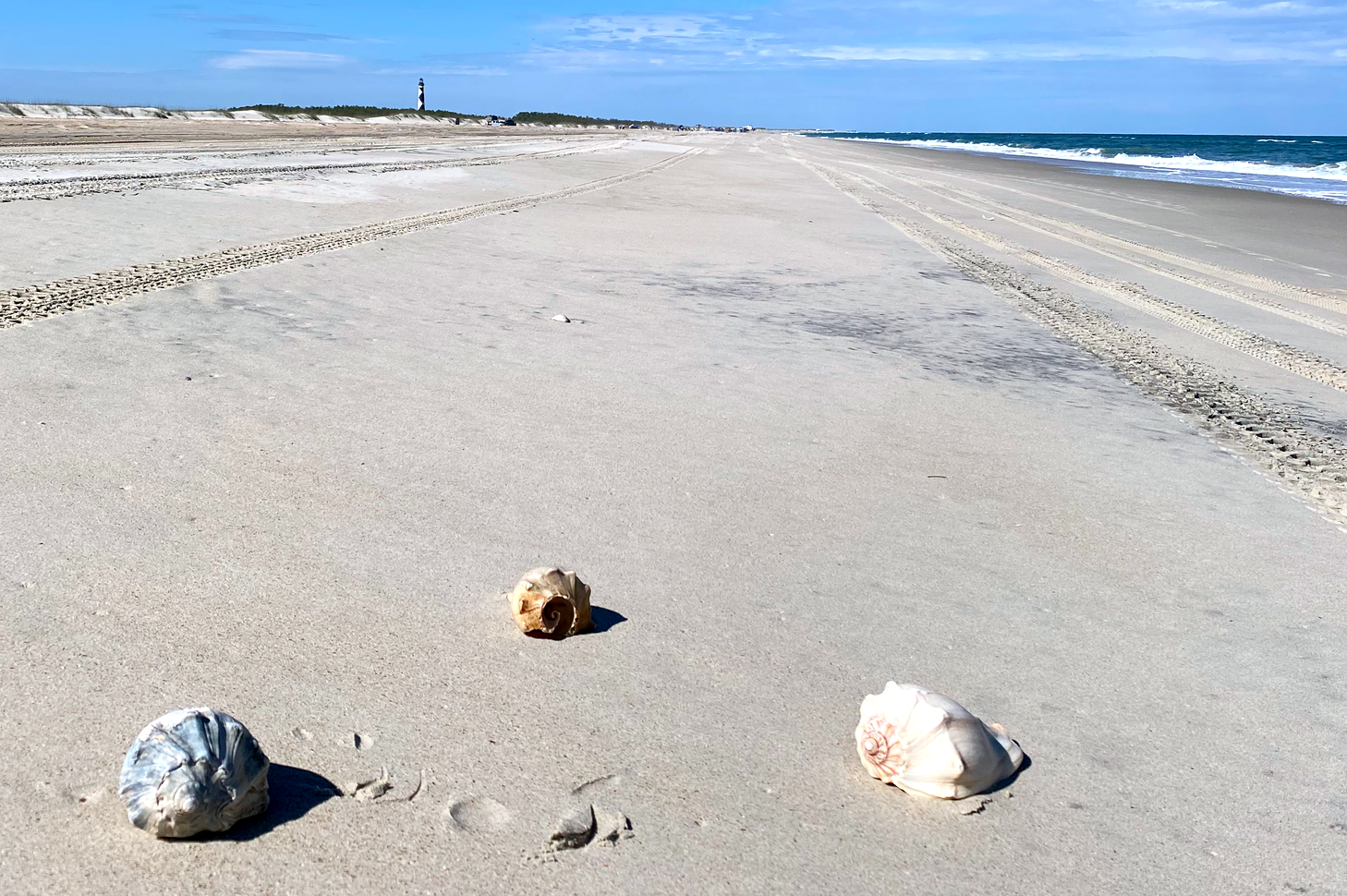
During summer months, Island Express runs pickup truck shuttles from the pier down the length of the beach. It's a fine option for reaching the Point without a long walk. The better option — for those who want to experience the island rather than just see it — is renting a UTV from Island Express and driving it yourself. The island looks different at 15 miles per hour with the wind off the ocean and nothing but sand ahead of you.
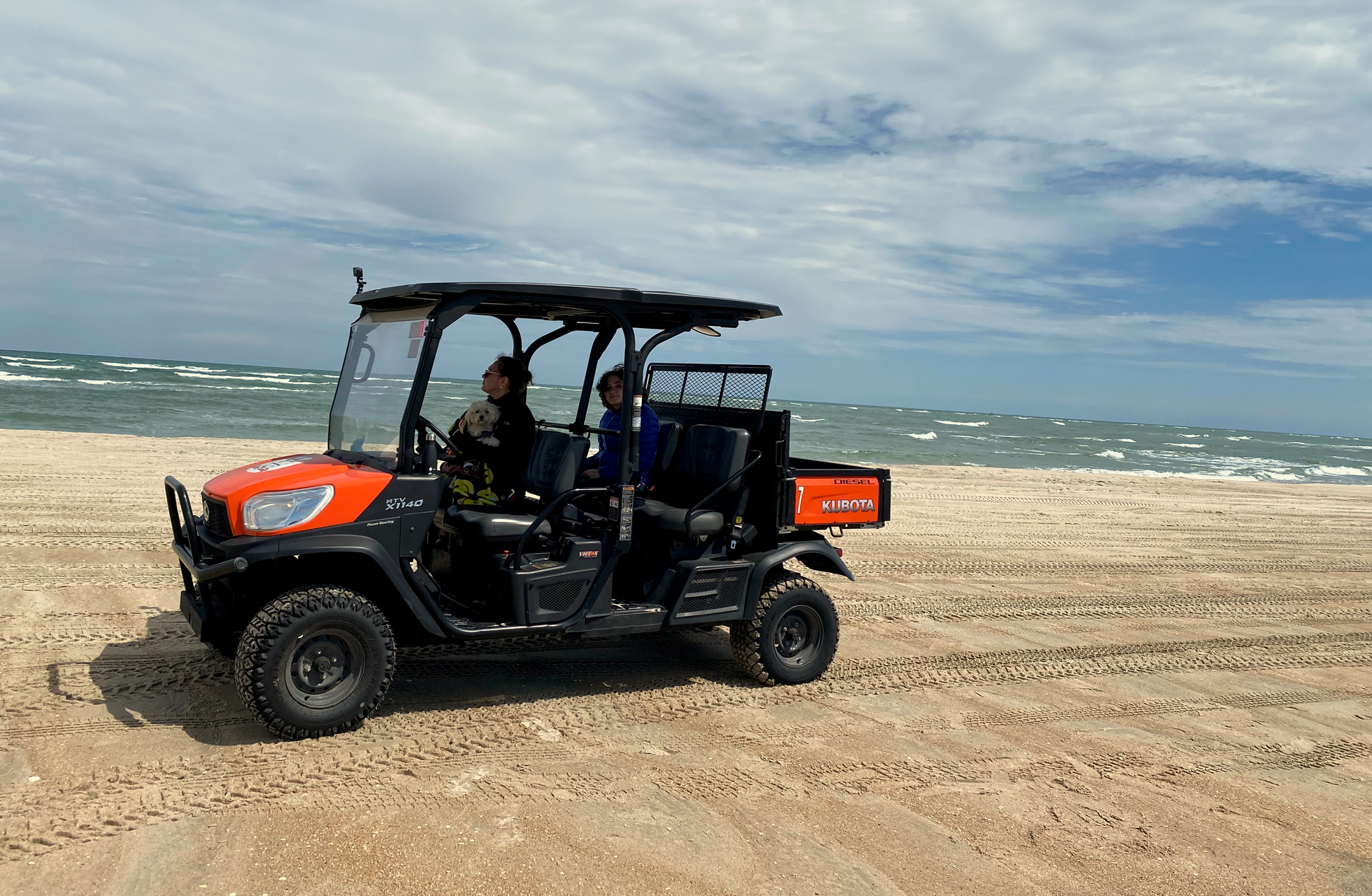
The Second Time: Bringing the Car
The passenger ferry version of Cape Lookout is good. Driving your own vehicle down several miles of Atlantic coastline is something else entirely.
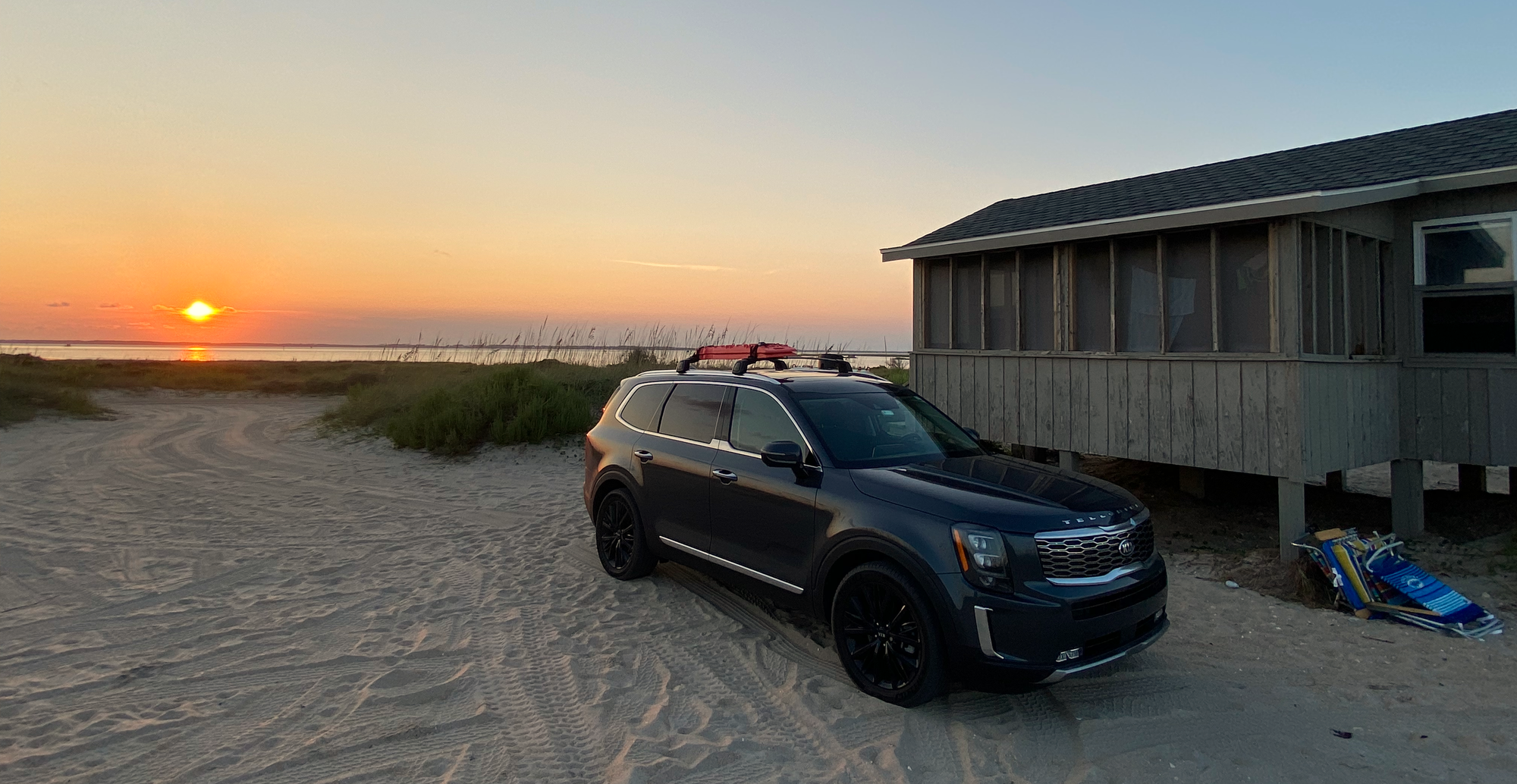
For the second trip, I loaded up the Kia Telluride and took the vehicle ferry from Davis, NC — a different crossing, a different scale of operation. The ferry is a working platform barge situation, nothing scenic about the logistics, but the ride across the sound more than compensates: dolphins running alongside the hull, shorebirds working the shallows, the barrier island growing larger ahead until you're on it.
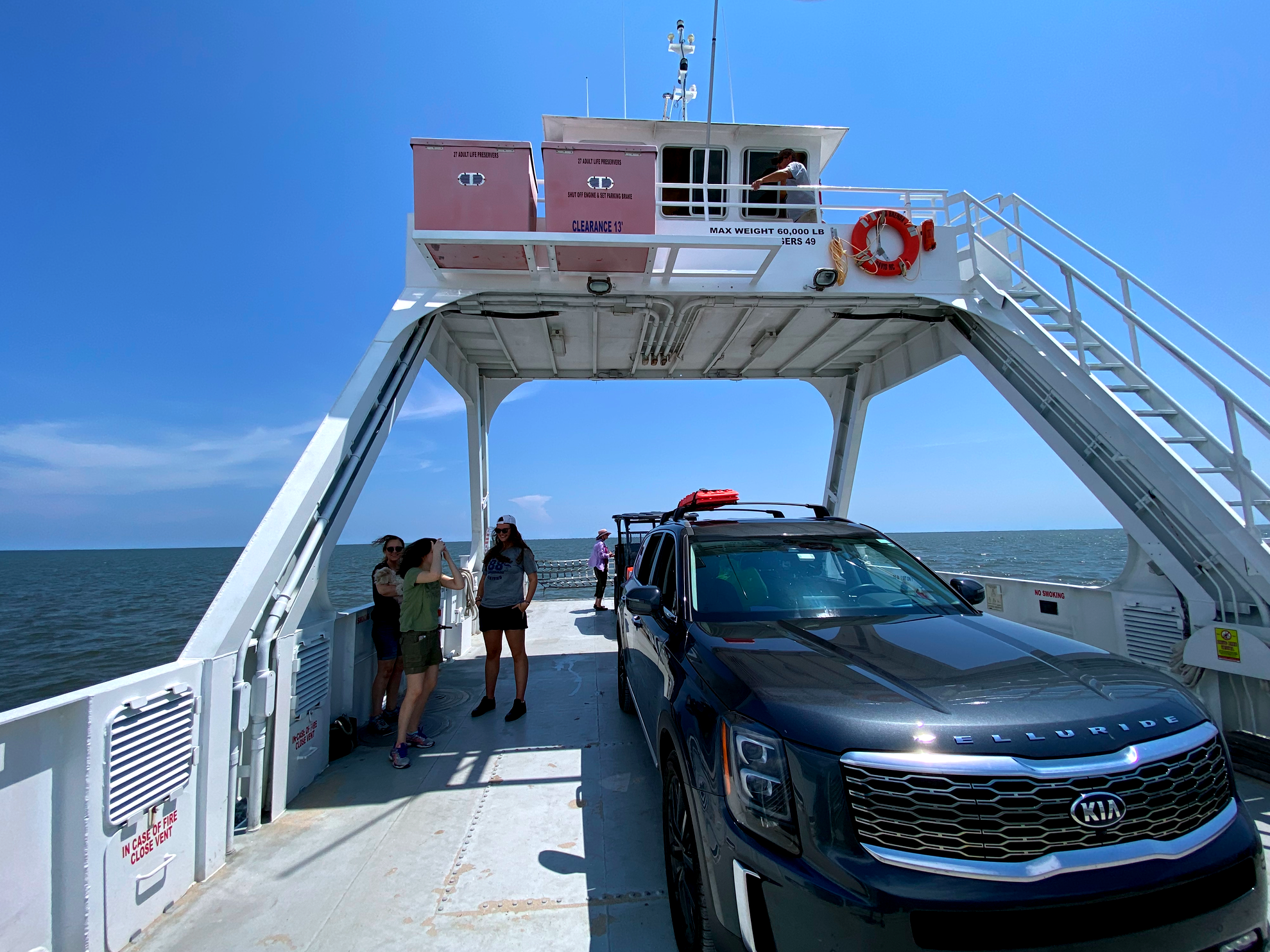
Once on the island, the beach is your road.
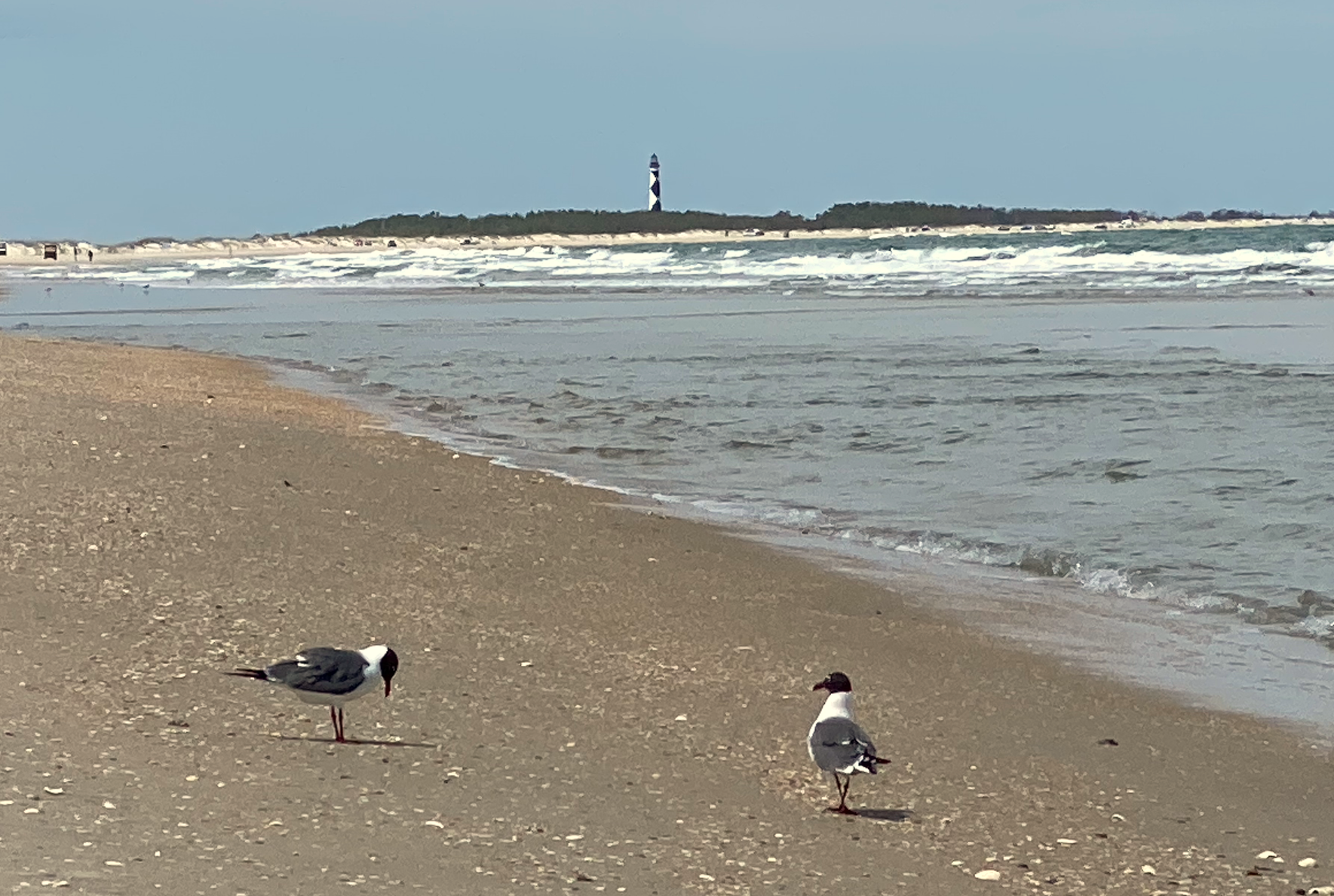
The drive south to the lighthouse is twelve miles, and for most of it, you will have the beach to yourself. We stopped twice — once for snacks on the sand watching the Atlantic come in, once because the shell concentration near the waterline was too good to drive past. The solitude at those stops was the kind that city people are briefly unsettled by and then immediately grateful for. No ambient noise, no other humans in either direction, just ocean and island and sky.
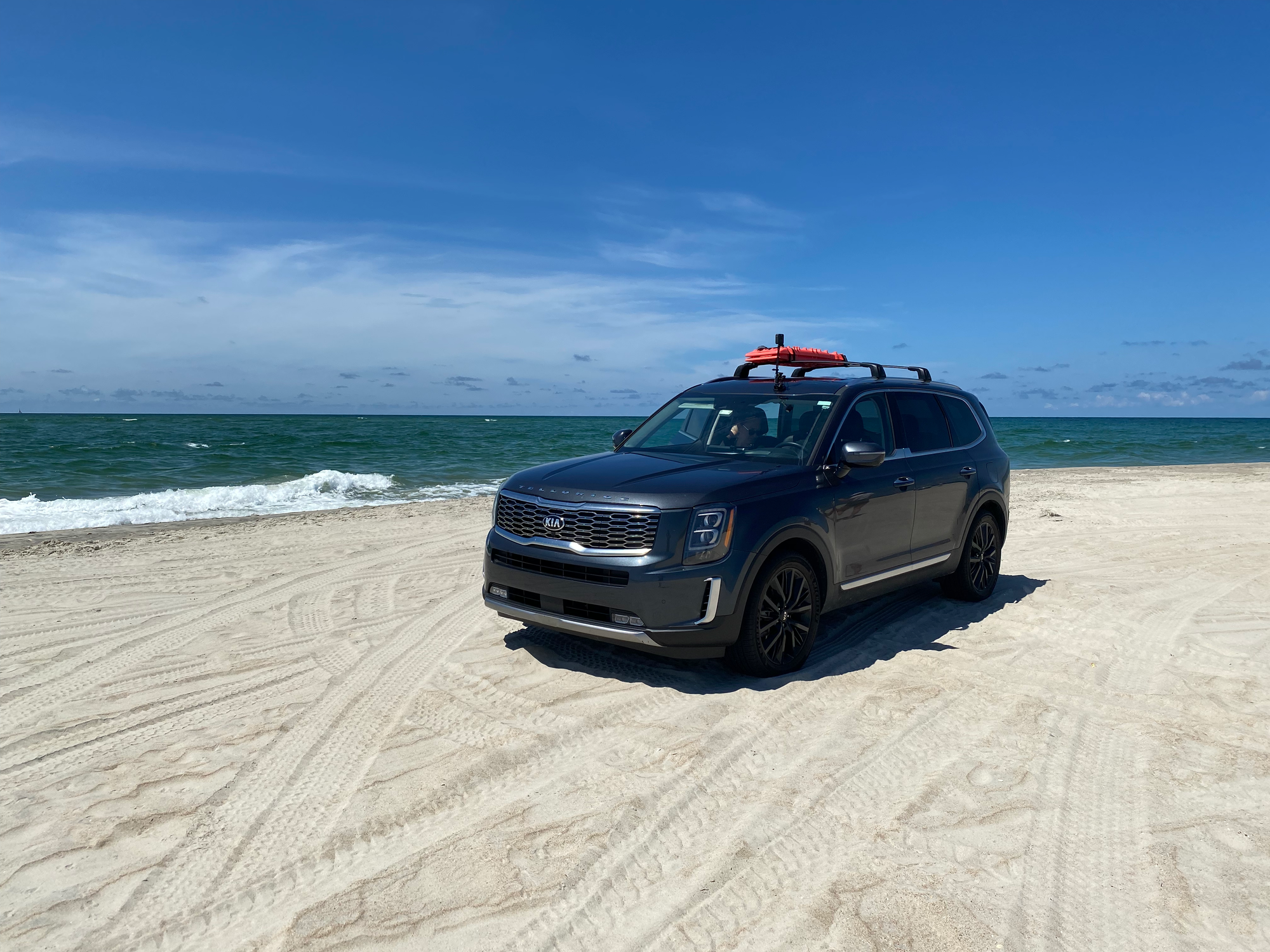
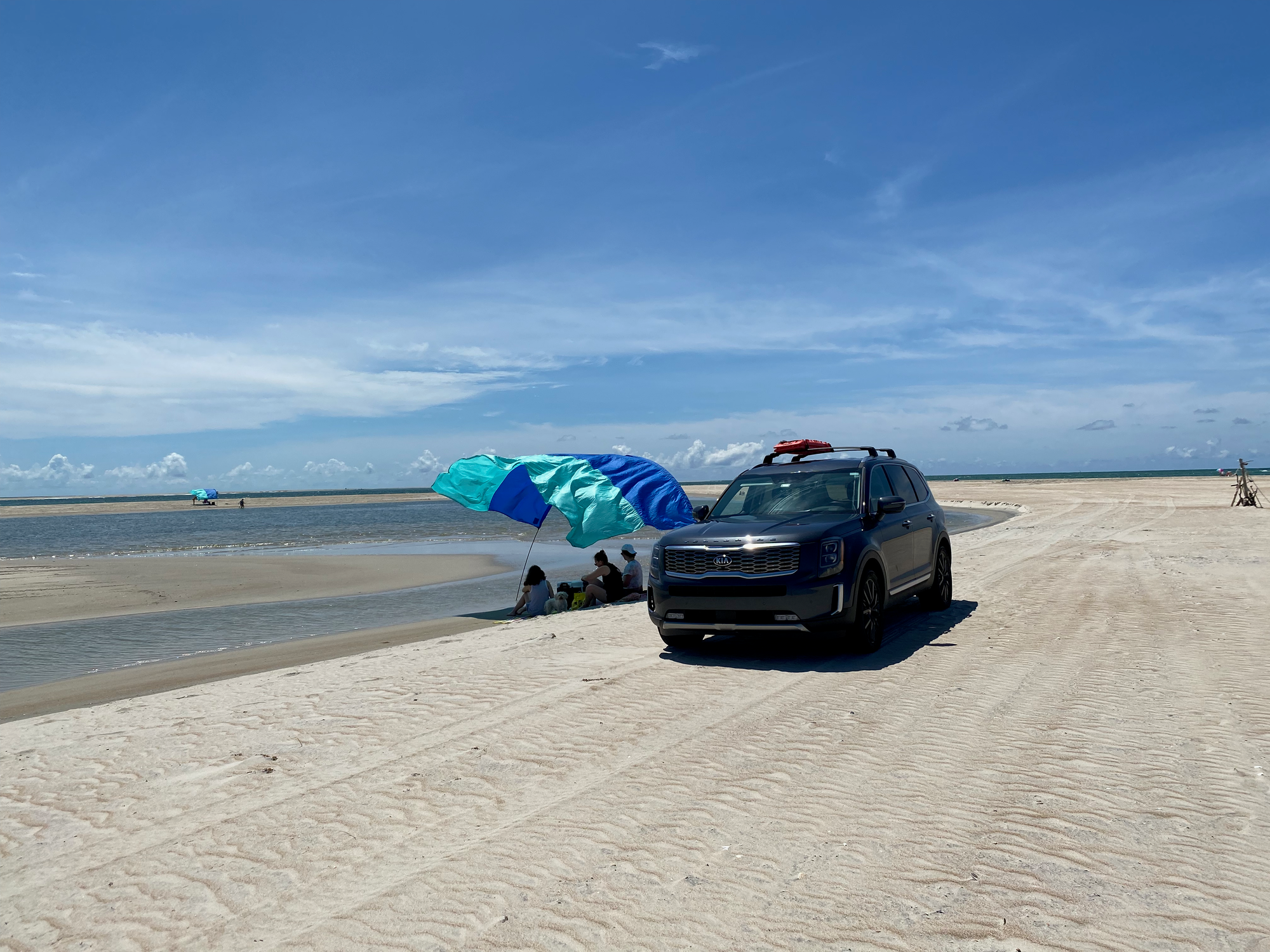
Near the lighthouse, the solitude ends. The southern tip of the island is where the day-ferry visitors and the UTV renters and the fishing trucks all converge, and the transition from empty beach to occupied beach is abrupt. It lasts about a mile. Then it's empty again on the other side.
The lighthouse on foot — which is how you have to see it, permit or not — hits differently when you've just driven twelve miles to get there. The 163-foot tower that looked impressive from the ferry feels earned. The museum visit feels less like a stop on a tour and more like a reasonable conclusion to a genuine journey.
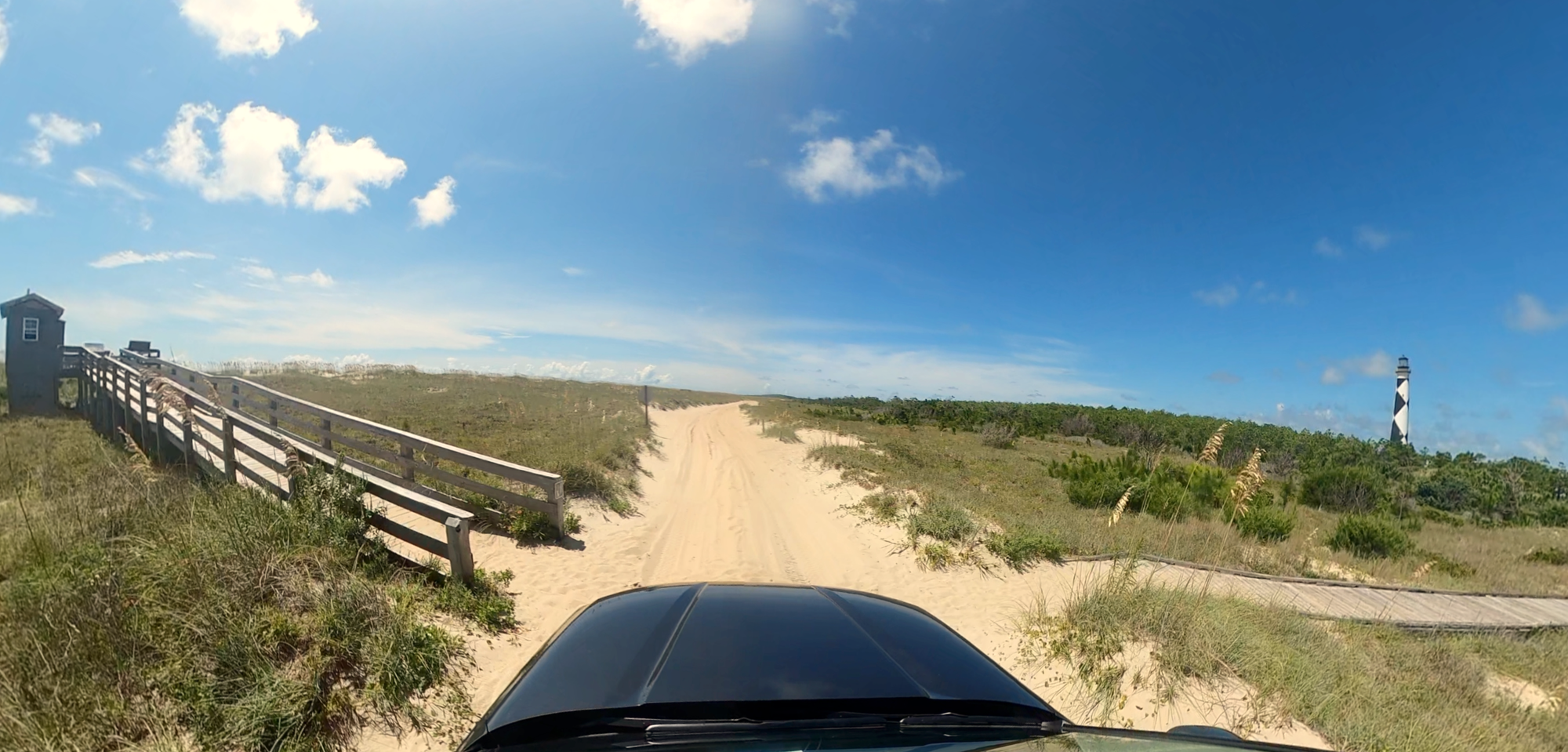
A note on beach driving: this is not casual off-road driving. The sand here is deep in places, the tide shapes the drivable surface constantly, and getting stuck is a real outcome if you're underprepared. Bring a tow cable and either a traction board or recovery mats. Know how to air down your tires before you get on the beach and air them back up before you return to pavement. If you've never driven in deep sand, rent a UTV for this one — it's a forgiving and genuinely fun way to cover the same ground without the risk.
All vehicles require an ORV Beach Driving Permit from the NPS before driving on the island.
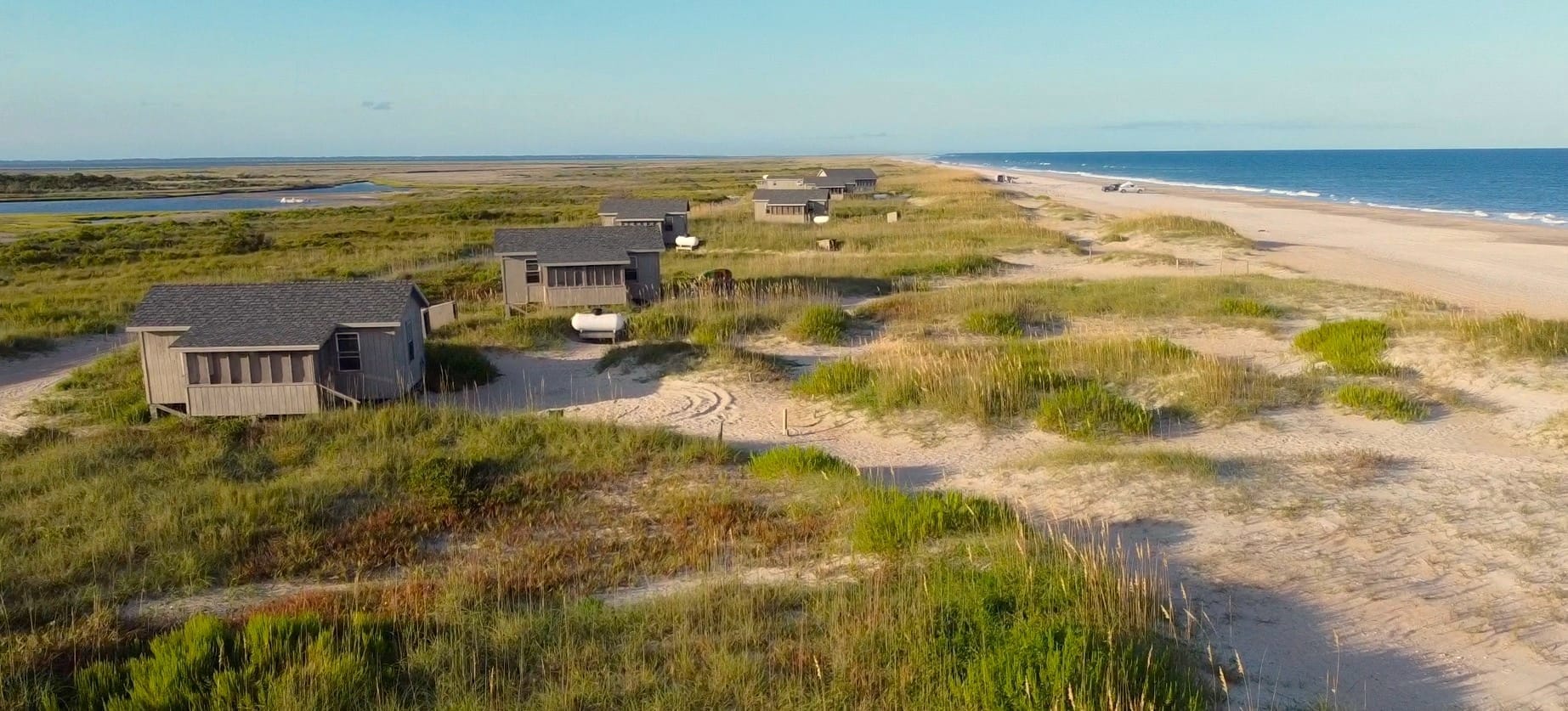
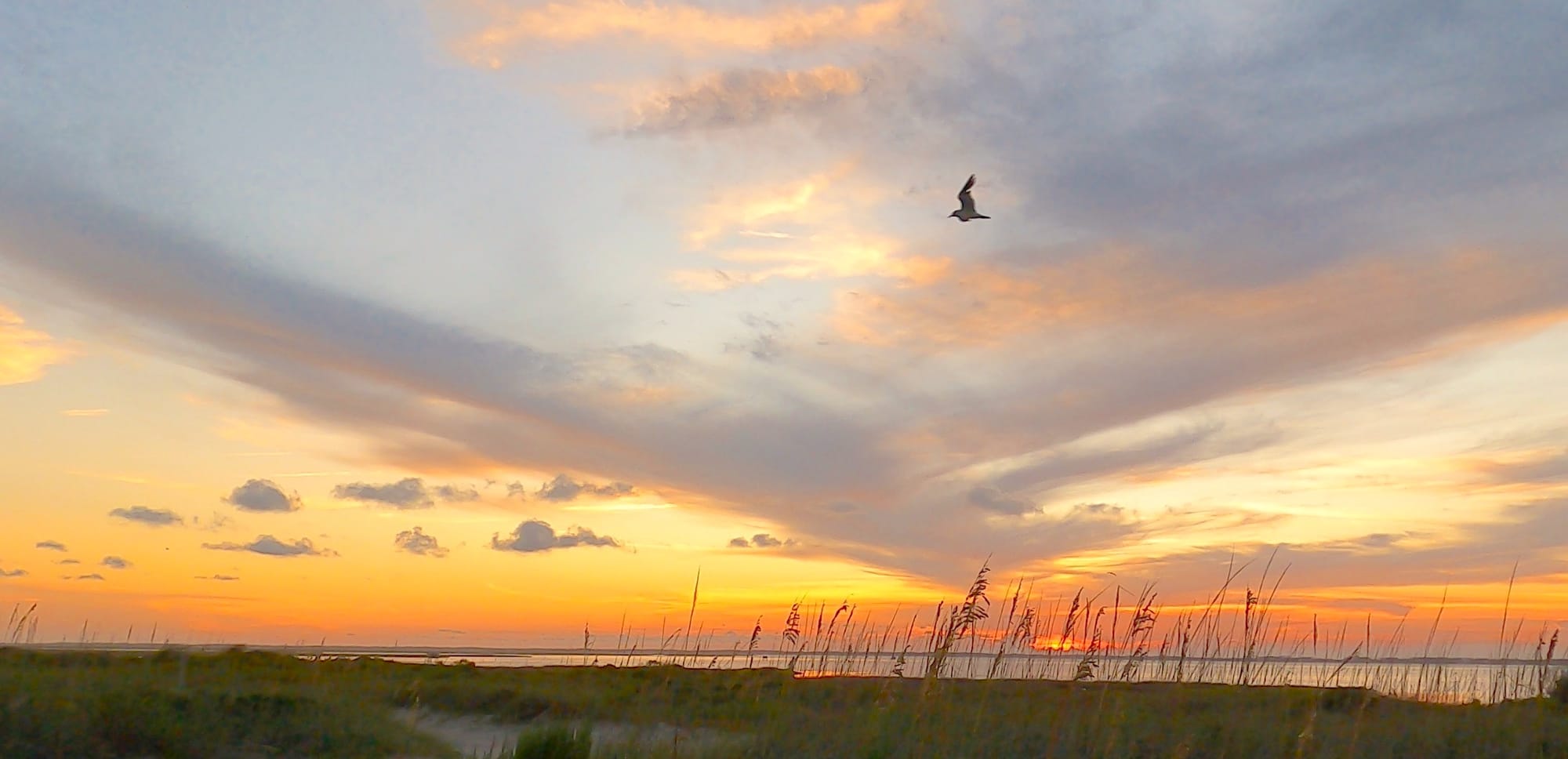
On the cabin: Our base for this trip was one of the NPS Great Island Cabins, rented through the National Park Service, and it deserves its own full account — which it will get, in a separate article. The short version: Cabin 8 sits on a section of the island narrow enough that you can watch the sunrise over the Atlantic and the sunset over the sound from the same porch. That alone would justify the trip. What happens after dark inside the cabin is a different story, and a funnier one.
Getting There
By passenger ferry: Island Express Ferries operates from Harkers Island, NC. The crossing takes approximately 20 minutes. The ferry also offers an optional stop at Shackleford Banks for a look at the wild horses that live on that island — worth considering if you have the time.
By vehicle ferry: Cape Lookout Cabins & Ferry in Davis, NC runs vehicle ferry service to South Core Banks. This is the route for those bringing their own 4WD. Book in advance for summer trips — vehicle capacity is limited.
Cape Lookout National Seashore is managed by the NPS. Full information on ferry services, permits, lodging, and shelling rules is available at nps.gov/calo.
Tips
- Get an early start regardless of how you arrive. The ferry ride gives you the best light in the morning, and the beach drive south is best done before the midday crowds reach the lighthouse area.
- For shelling, go at low tide. Check tide tables before you go and plan your walk to the Point around the low. The difference in yield between a low-tide morning and a mid-tide afternoon is significant.
- Know your vehicle before you take it on the beach. 4WD with high clearance is the minimum. Bring recovery gear. Air down to around 20 PSI before you get on the sand. If none of that is familiar language, rent a UTV from Island Express instead.
- The ORV Beach Driving Permit is required for all vehicles driving on the island. Get it from the NPS before you go — nps.gov/calo/planyourvisit/orv_ed_certificate.htm.
- Mark your GPS at the ferry landing. The beach stretches for miles in both directions and the landmarks are subtle. It sounds excessive until the return trip.
- Take only empty shells. If something lives in it, it stays on the beach.
Where to Stay
The NPS Great Island Cabins on South Core Banks are the only lodging on the island, and they are something else. Basic by design — no electricity, no running water as you'd expect it — but located on a strip of barrier island so narrow that you can watch the ocean and the sound from the same porch. Reservations go through recreation.gov and fill up fast for summer dates. More on what it's actually like to sleep there in a separate article.
For those preferring a mainland base, Beaufort and Morehead City are the nearest towns with full lodging options, roughly 30–45 minutes from the Harkers Island ferry terminal.