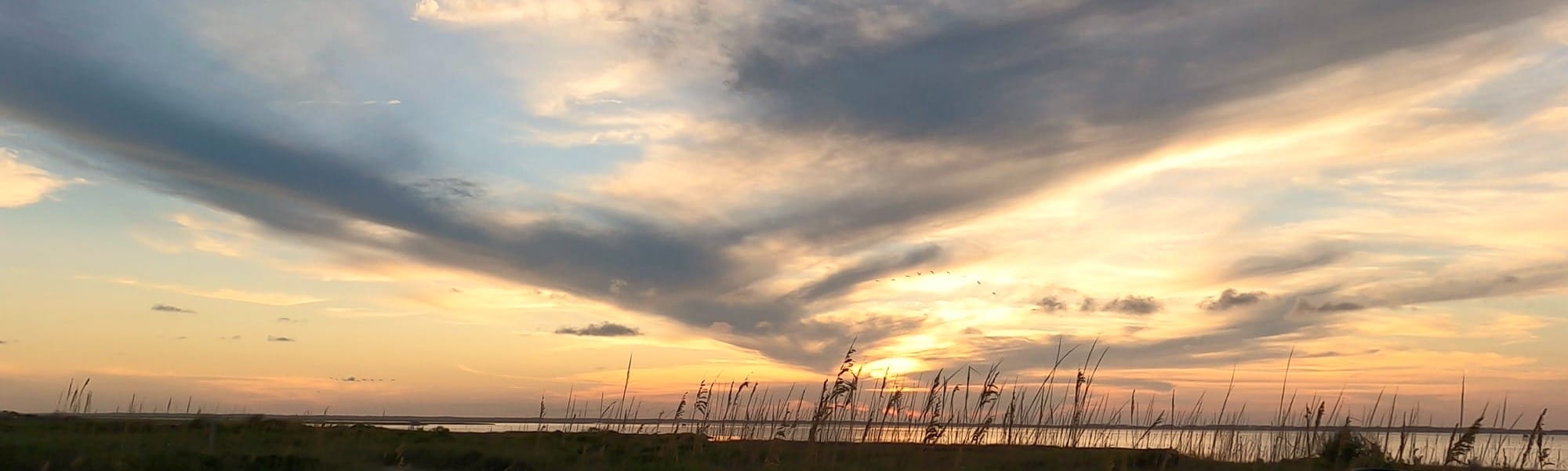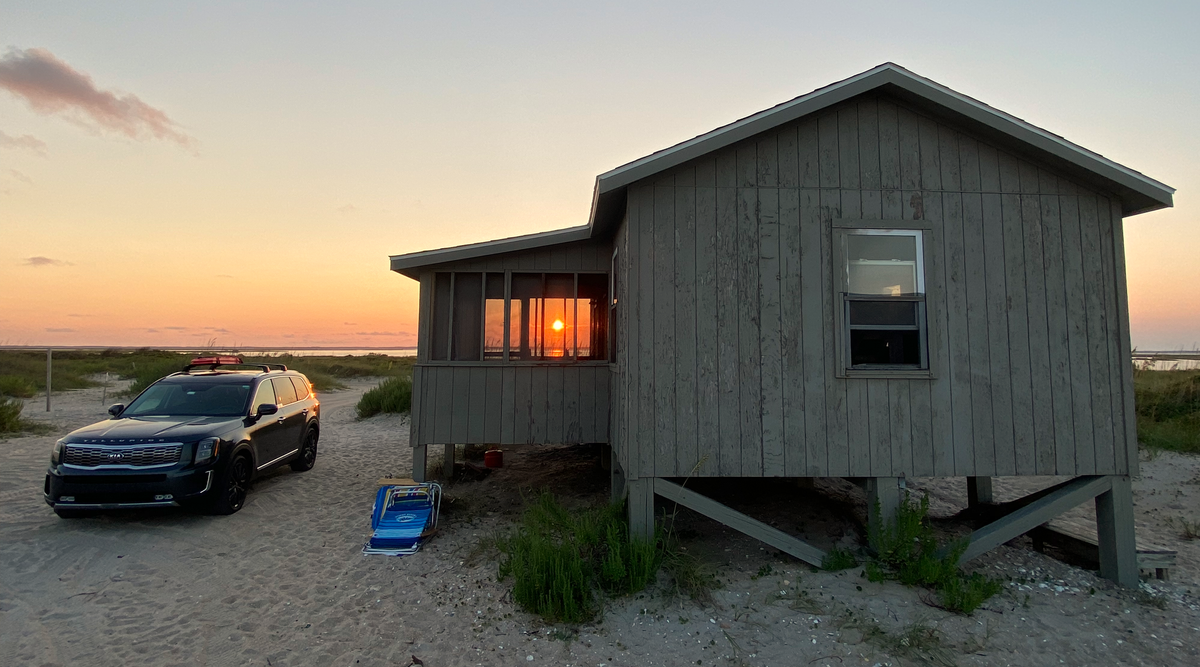
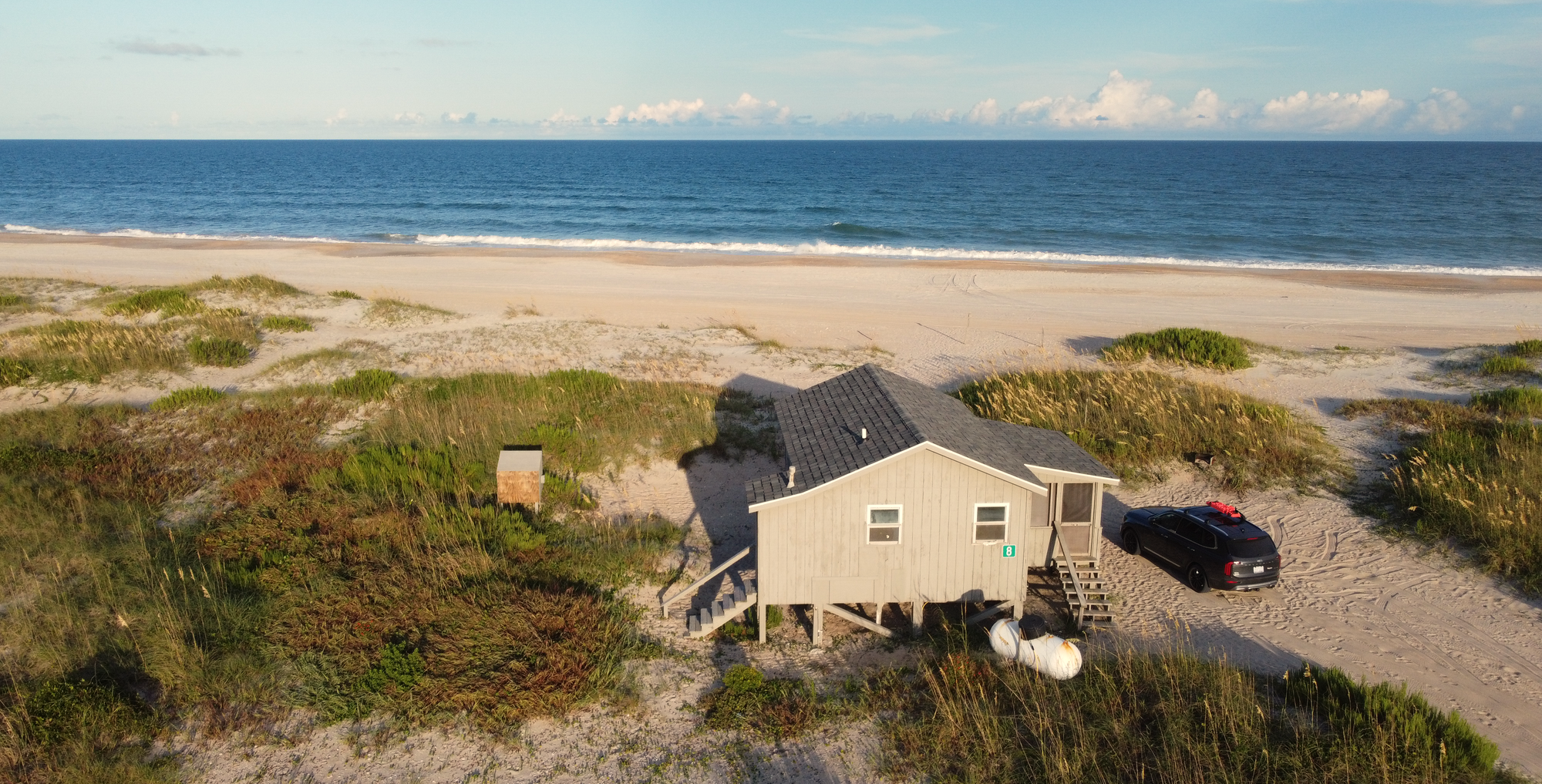
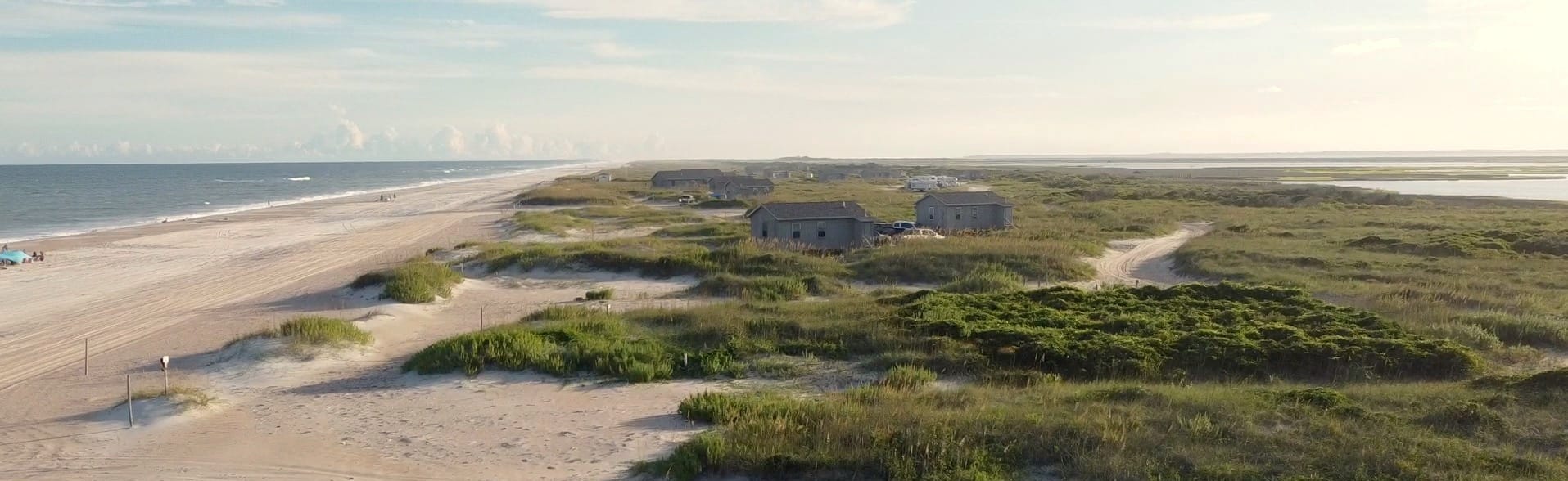
Imagine waking up to the sound of the Atlantic. Not the muffled suggestion of it through a hotel window, but the full unfiltered version — waves rolling in twenty yards from your door, salt air drifting through the screen, morning light coming in low and gold over the water. You step onto the porch in bare feet. To your left, the ocean. To your right, the sound. The island is maybe two hundred feet wide at this spot. You are, without exaggeration, surrounded by water on both sides.
This is Cabin 8 on South Core Banks. And for the first twenty-four hours, it is everything.
The Cabin
The NPS Great Island Cabins are not glamping. Let's be clear about that. But they are more than the bare-bones shelter the description on recreation.gov might lead you to expect.
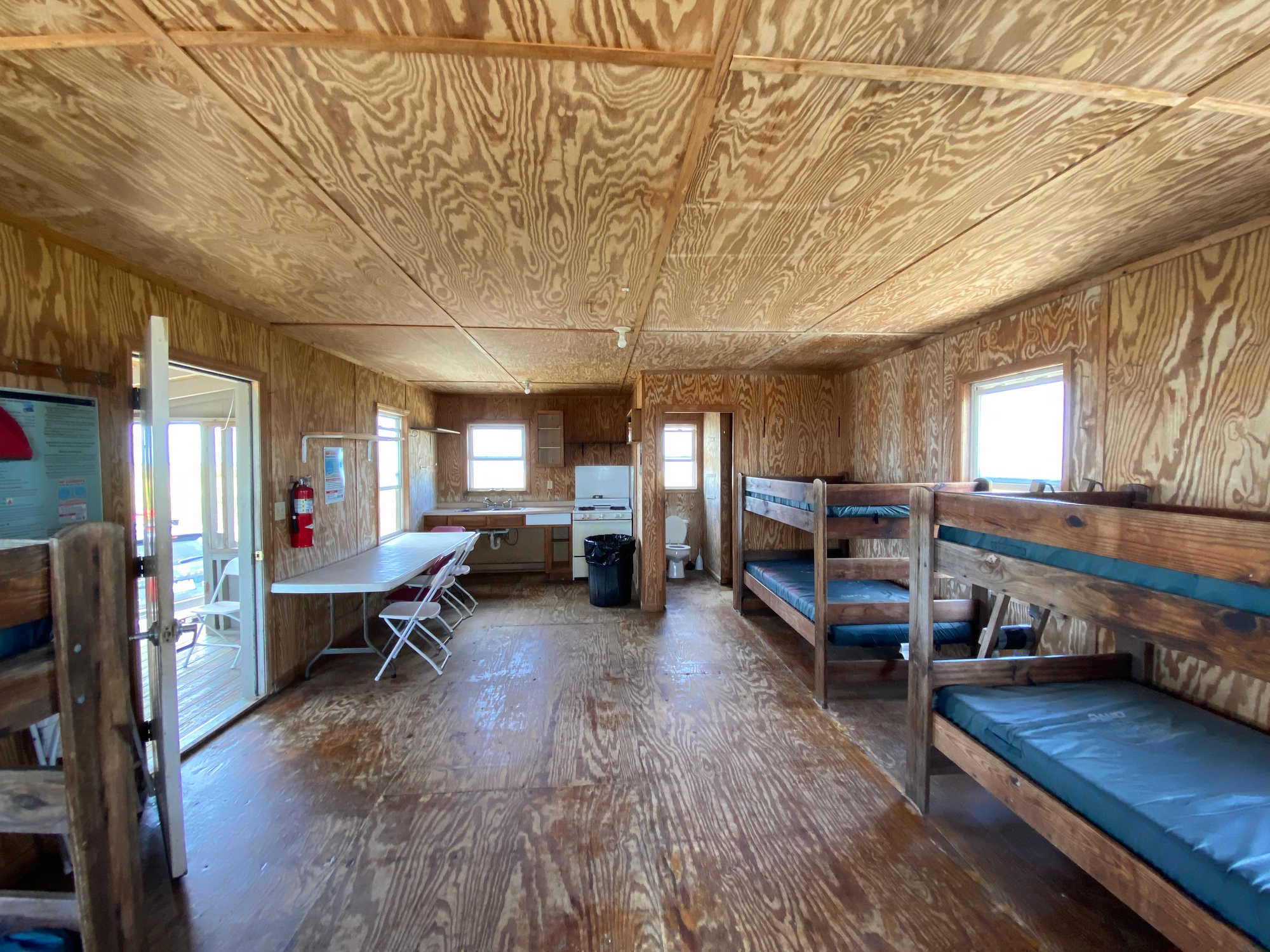
The structure is solid and well-maintained — sturdy walls, screened windows on every side, a proper door with a screen that actually closes. Eight bunk beds, simple but with mattresses that you won't resent in the morning. Bring your own linens and pillows, and within ten minutes of arriving you'll feel genuinely at home.
The kitchen is functional in a way that matters: a propane range, a propane oven, a sink with running water. Hot water, too — the water heater runs on propane, which means a real shower at the end of a day in the sun and sand. That detail — the hot shower — elevated the whole experience beyond what I'd prepared myself for. A plate of food cooked on a real stove, followed by a hot shower, followed by a cold drink on the porch watching the sun go down over the sound: this is what the cabin is built for.
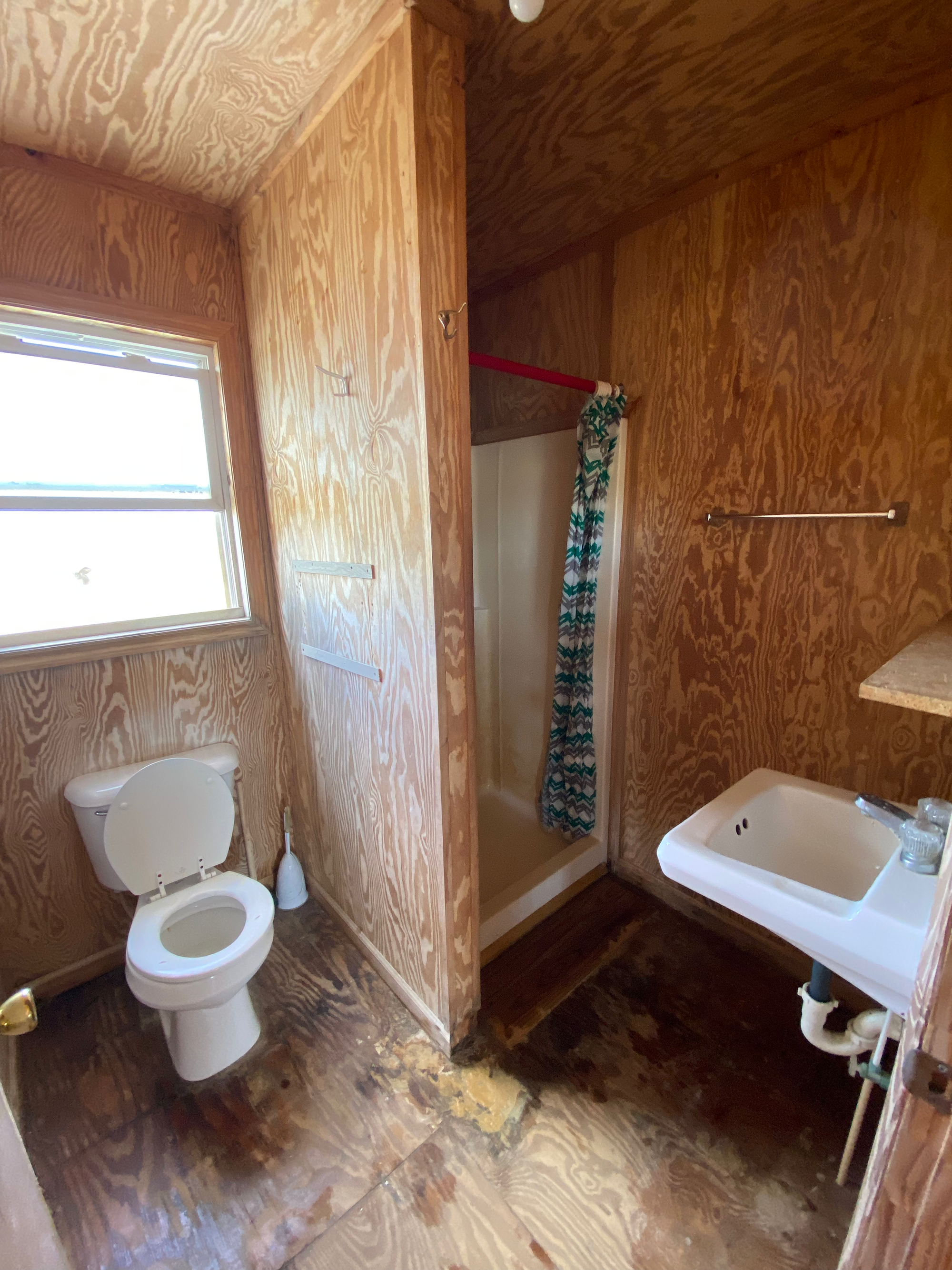
Electricity comes from a portable generator. The cabin is pre-wired — a cable runs from the generator house outside into the cabin's power outlets and interior lights — so you plug in, power up, and recharge phones and cameras until the generator goes off for the night. After that, it's headlamps and stars and the sound of the ocean, which is not a bad trade.
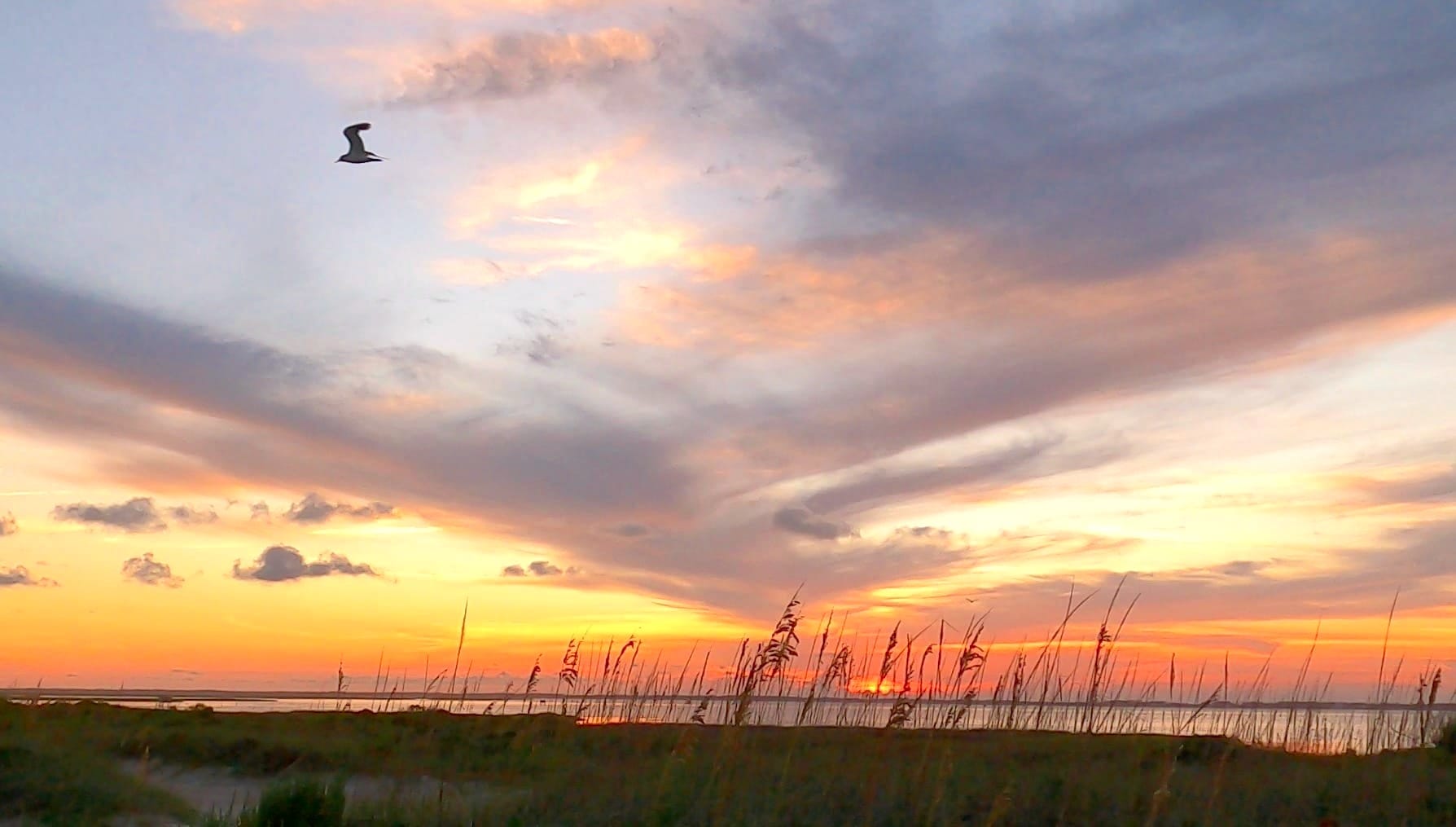
The location, though. The location is the thing. The island here is so narrow that the horizon gives you ocean on one side and sound on the other. You don't have to choose between the sunrise and the sunset. You just turn around.
Night One
We arrived in August 2021 after the vehicle ferry crossing from Davis, NC — my wife, my teenage daughter, the international exchange student we were hosting that year, and enough food for a small expedition. We checked in at the NPS office, drove down to Cabin 8, and spent the afternoon doing what the island asks of you: nothing in particular, at the water's edge, with no one else in sight.
Dinner was cooked on the propane range. Showers were hot. The generator went off at nine. We were asleep by ten.
The first night was perfect. Heavy, dreamless sleep, the kind that only happens when you've been outside all day in the heat with your feet in the sand. The kind of sleep that makes you feel like you've earned the morning.
The morning was good too, right up until we started using the kitchen sink.
There, distributed across the countertops and the corners of the cabinet beneath the sink, was a significant quantity of cockroach droppings. Not a little. Not a hint. A statement. The kind that communicates, with clarity, that the cabin has permanent residents who find the nighttime hours perfectly comfortable and who have been using this kitchen long before you showed up.
We cleaned everything. Disinfected every surface and every dish. Had breakfast without incident. Noted the information. Filed it away.
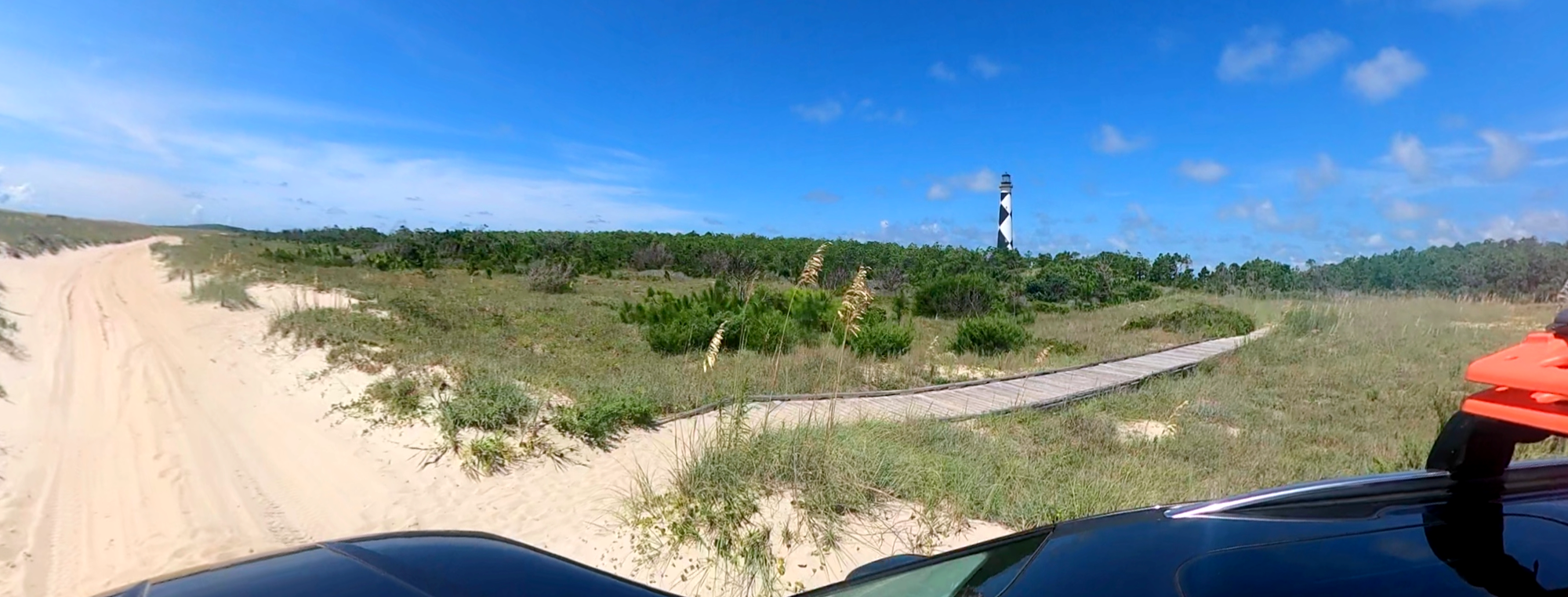
As a precaution — a reasonable one, we told ourselves — we put every piece of food we could into the cooler and tied shut every bag that didn't fit. We left for the day: drove south to the lighthouse, walked to the Point, came back sunburned and happy and tired in the way that island days leave you.
Night Two
I have to be honest about something before I continue. One of my genuine, actual fears — the kind that I know is disproportionate and cannot fully explain — is waking up with a cockroach on my face. On my face. This is relevant to everything that follows.
Armed with this self-knowledge, and with a clear view of the evidence we'd found that morning, I decided that the solution was packaging. Brilliant, I thought. Every food item that didn't fit in the cooler went into grocery bags, then into trash bags, then tied tight. Hermetically sealed, or as close to it as plastic bags allow. Nothing gets through.
We cooked dinner, ate well, enjoyed the night sky from the porch for a while, then went inside to sleep. The teenagers were out within minutes. My wife was next. I was lying there in the dark, too warm to be comfortable — the heat of the day had baked into the cabin walls, and though we slept with every window and door open, the ocean breeze had politely declined to enter — reading on my Kindle until around midnight.
I turned off the reader. Closed my eyes. Started to drift.
Then I heard it. Plastic. Crunching.
I turned on my phone flashlight. At least six cockroaches scattered from the kitchen counter and vanished into the baseboards and the gap under the sink, moving with the specific efficiency of creatures who have been doing this for millions of years and are not especially concerned about your flashlight.
I waited. Turned off the light. Settled back down.
The crunching resumed almost immediately. They hadn't left. They'd waited. And it sounded, in the dark, like they had brought reinforcements.
What followed was two hours of escalating conflict that I am not proud of and that I also cannot stop thinking about. The cycle went: crunching plastic → phone light → cockroaches scatter → flip-flop raised in threat → no contact made → back to bed → lights off → crunching resumes → repeat. The flip-flop never connected. Not once. I began to suspect they were mocking me.
Eventually, exhausted and still not asleep, I tried waving my blanket around the bunk bed every few minutes — a completely irrational defensive maneuver that nevertheless made me feel better. It made no difference. They ignored it.
And then, after about two hours, silence. Real silence. The crunching stopped.
I felt something approaching victory. I relaxed. I stopped the blanket-waving. My breathing slowed.
Fifteen minutes later: the crunching started again. But louder. Much louder.
For a moment I genuinely thought the roaches had grown. I am not joking. In the dark, groggy and defensive, the thought crossed my mind that Mama Roach had arrived to deal with the situation personally. I lay there for a full minute gathering my nerve before I turned on the light.
No cockroaches. The bags were moving.
I got out of bed and walked to the kitchen. I looked at the plastic bag on the table. Inside the bag — between the outer layer of plastic and the food container — was a mouse. Perfectly still. Doing its best impression of something that wasn't there. On the other side of the table, a second bag. A second mouse. Same strategy.
So: mice. I had been fighting cockroaches for two hours and had completely missed the mice.
The weapon I chose, after five seconds of deliberation: the broom. I wanted them out, not harmed. This turned out to be more complicated than it sounds. For each bag, I had to use the broom to pin the mouse to one end while carefully unwrapping the plastic from the food container with my other hand — all without making enough noise to wake the teenagers, who, I noted with mild resentment, were sleeping perfectly.
While I was managing the second mouse, the first one found a gap in its bag, jumped from the table to the floor, made it to the door, and disappeared between the deck boards in the time it took me to look up. Gone. Into the night.
The second mouse I managed to trap in the bag and carry outside, where I released it onto the deck in the moonlight. It sat there for a moment, looked at me, and left.
I came back inside and did what I should have done before getting into bed: shut the cabin door and pushed a rag against the gap at the bottom. That was the whole solution. That one move.
My wife was the only one who'd been awakened by any of it. The teenagers slept through the entire performance without interruption.
I repacked the food into clean bags. Got back in bed around 3:00 AM. The cockroaches did not return until somewhere around 5:00, by which point I was almost too tired to care. I finally fell asleep a few minutes before six, and slept for exactly one hour before getting up for the sunrise.
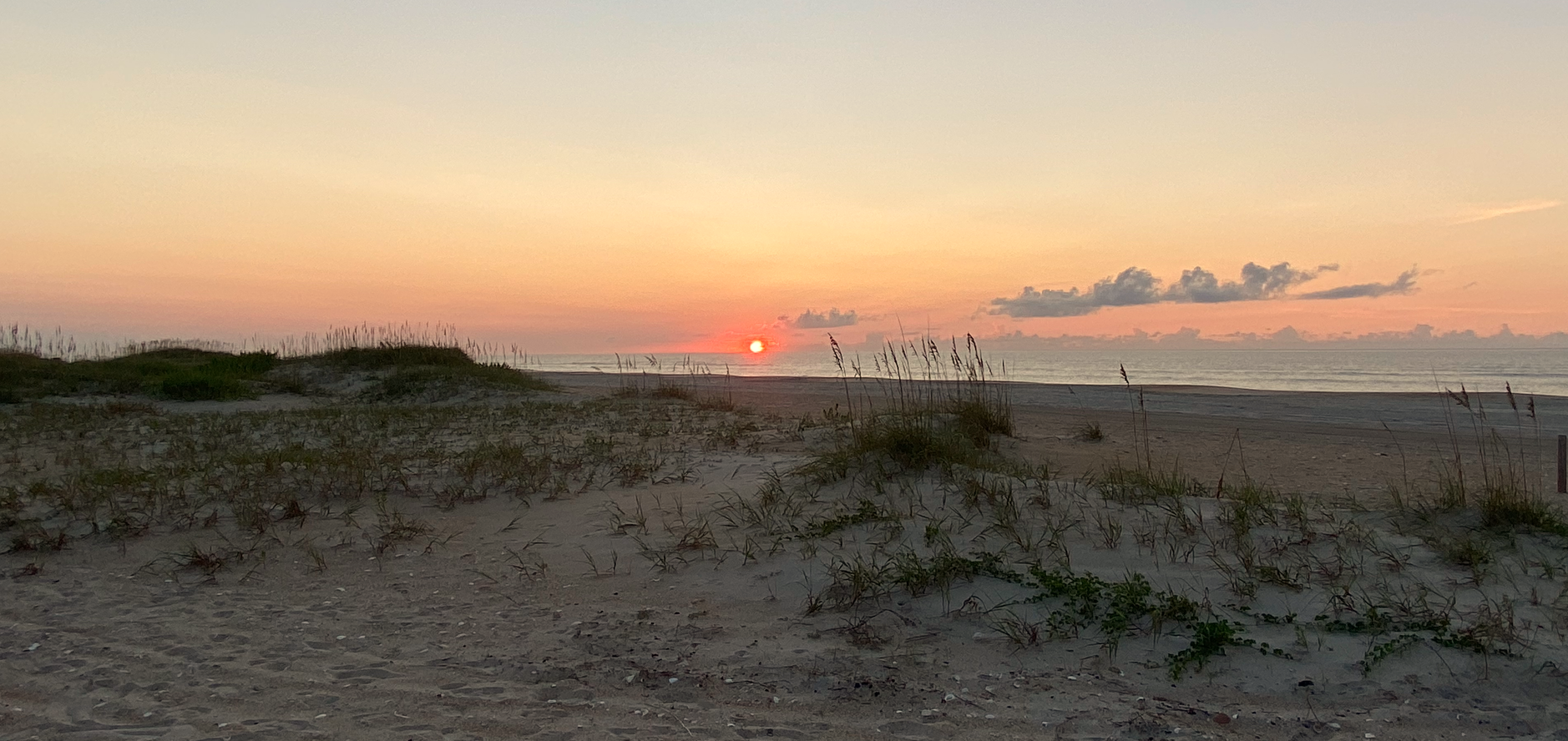
It was worth it. The light coming in flat and gold over the ocean on a clear August morning, with the sound still dark behind you and the beach completely empty: worth every minute of sleep I didn't get.
We packed out, checked in at the NPS office, and mentioned our cabin companions to the rangers. They told us Cabin 8 hadn't been treated yet that season. They were working on it.
Lucky us.
Getting There
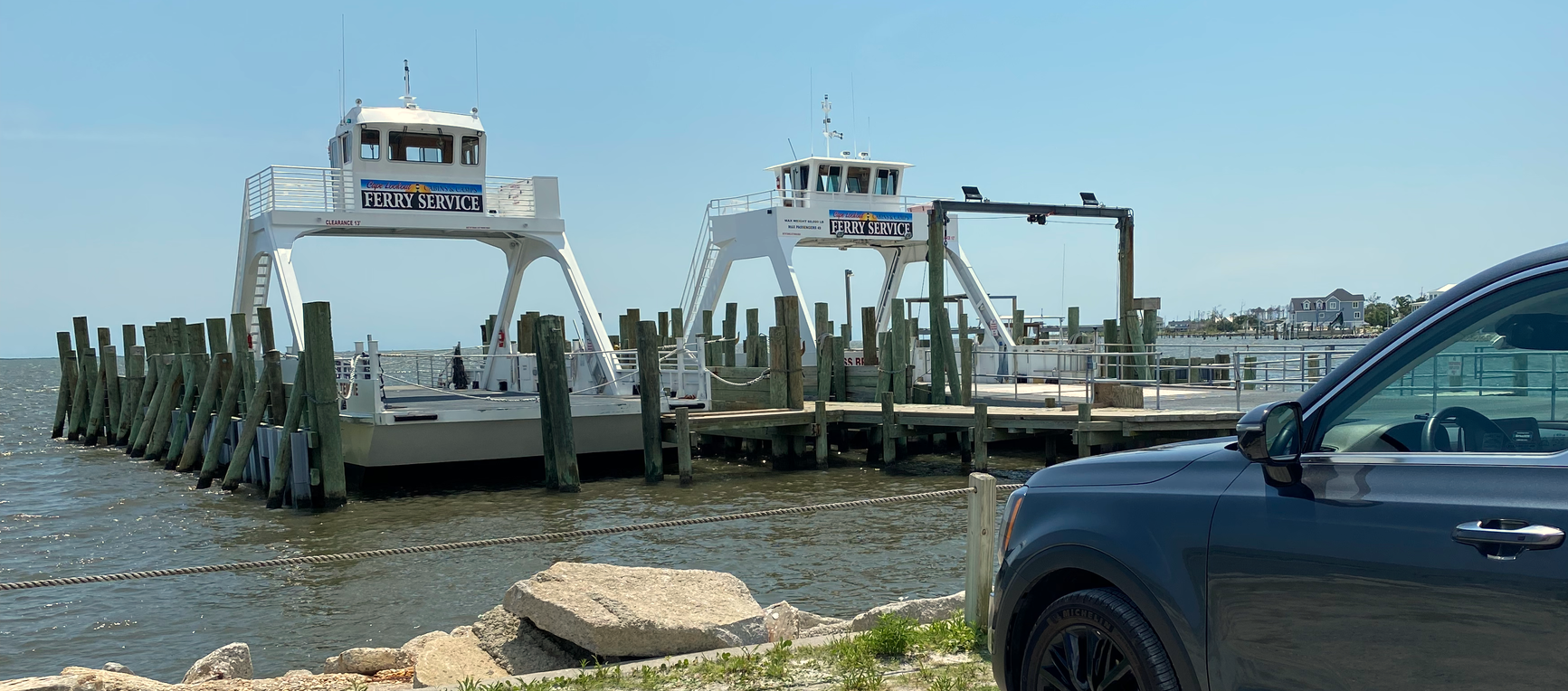
The Great Island Cabins sit on South Core Banks, accessible via vehicle ferry from Davis, NC (Cape Lookout Cabins & Ferry). The vehicle ferry is the only way to bring your car — and your car is what lets you drive the twelve miles of beach to the lighthouse and stay on the island overnight. Passenger ferry service also runs from Harkers Island if you're visiting without a vehicle, but the cabins are the vehicle-ferry experience.
Reservations are through recreation.gov and book out months in advance for summer dates. Plan accordingly.
Tips
- Shut the cabin door at night. Put a rag, a towel, anything against the gap at the bottom. This is the single most useful thing I can tell you and the thing I most wish someone had told me.
- Bring roach traps. The large ones. Set them before your first night, not after you've already had the evidence conversation over breakfast.
- Use hard-sided food containers if you have them. Plastic bags are not protection. The mice specifically will find the gap. A hard cooler or a sealed plastic bin is a different story.
- Bring bug spray and apply it before bed. The screens keep the mosquitoes out, but the cabin has its own ecosystem.
- A portable generator is worth bringing. The cabin has the cable and outlets ready — you just need the generator. Phone charging and interior lights make the evening significantly more comfortable.
- The heat is real. August on the NC barrier islands is serious. The cabin stays warm at night even with every window open. A small battery-powered fan makes a significant difference.
- The showers are hot and the stove is real. These are not backup amenities — they're part of what makes the cabin work. Bring cooking supplies, bring good food, cook a proper dinner. You're in one of the more remote spots on the East Coast. Act accordingly.
What to Know Before You Book
The NPS Great Island Cabins are the only lodging on South Core Banks — there's nothing else on the island. Each cabin comes equipped with bunk beds, propane range/oven/water heater, kitchen sink, and basic furnishings. You bring linens, food, water, a generator if you want electricity, and whatever tolerance you have for wildlife encounters.
Reservations at recreation.gov. Book early.
The "Battle of Cabin 8" was memorable, genuinely funny in retrospect, and not a reason to avoid this place. It's a reason to prepare. Do that, and you get everything the cabin actually offers: the island to yourself, sunrises over the Atlantic, dinners cooked from scratch, the sound of the ocean through the screens all night. It's the kind of experience you'll keep trying to describe to people who weren't there.
Just shut the door.