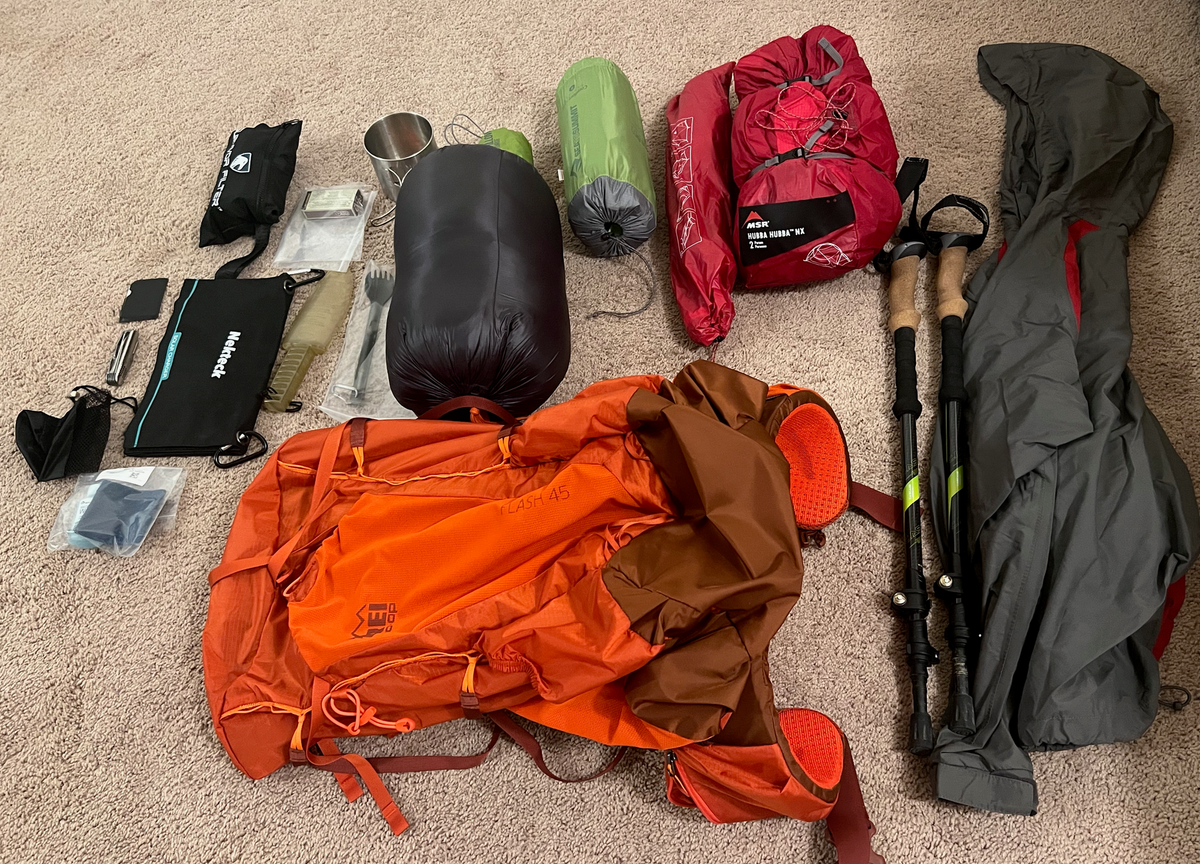
Gearing up for four days in the Grand Canyon without overpacking or under-packing.
This post is part of the travel series "Grand Canyon 4-day Rim-to-Rim Hike".
Packing for a multi-day backcountry hike is always a balancing act. You want to be prepared for anything, but every extra ounce matters when you're climbing out of a canyon. Here's what we brought — and a few notes on what actually earned its place in the pack.
The Backpack
A 40+ liter backpack is the sweet spot for a 4-day Rim-to-Rim. We used packs from Osprey and REI, each fitted with a 3-liter hydration bladder (CamelBak-style). The hydration bladder is key — being able to sip water without stopping or digging through your pack makes a real difference over long trail days.
The Big Essentials
| Item | Notes |
|---|---|
| Hiking boots | Broken in. Seriously, break them in before the trip. |
| Tent | One per two hikers to split the weight |
| Sleeping bag | Temperatures drop at night, especially at higher elevations |
| Sleeping pad | Comfort and insulation from the ground |
| Hiking/walking sticks | Non-negotiable for the descent — your knees will thank you |
| Headlamp / flashlight | With fresh batteries. You'll be starting hikes before sunrise. |
Clothing
- Hiking shorts — your daily uniform
- Pants — for cool mornings and evenings
- Base layer — for nights and early mornings at higher camp elevations
- Sweater — layering is everything
- Rain jacket — the canyon weather can surprise you
- Socks — wool or Smartwool. No cotton. Multiple pairs.
- Hat — sun protection is not optional
Water & Cooking
| Item | Notes |
|---|---|
| Water filter | Essential for refilling from creek water sources |
| Jetboil stove | Compact and efficient for boiling water |
| Portable propane canister | Buy at your destination — can't fly with these |
| Mini sponge | For cleaning your cook pot |
| Mini dish detergent | A small bottle goes a long way |
Food & Snacks
We bought most of our food in Phoenix before driving to the canyon:
- Dehydrated meals — dinner and some lunches
- Dehydrated breakfast — oatmeal, dehydrated omelettes
- Snacks — trail mix, energy bars, dried fruit, jerky
- Water — extra bottles for the first day before water sources are available
One meal at the Phantom Ranch Canteen on Day 2 gave us a welcome break from the dehydrated routine.
Hygiene & Personal Care
- Humidified wipes — your trail shower
- Hiking toilet paper
- Trowel / poop shovel — pack it in, pack it out (Leave No Trace)
- Travel toothbrush and toothpaste
- Travel soap bar
- Sunscreen — reapply generously and often
- Insect repellent
Safety & Emergency
- Emergency blanket (space blanket)
- Blister prevention kit — moleskin, blister pads
- Foot repair kit — for when prevention fails
- First aid / emergency kit
- Knife
- Waterproof matches
Electronics & Extras
- Power bank — keep your phone charged for photos and emergencies
- Solar panel charger — one for every couple of hikers, strapped to a backpack
- Flash drive — for backing up photos
- Trash bags — for packing out all waste
What to Leave Behind
A few things that might seem tempting but aren't worth the weight:
- Heavy camera gear — your phone camera is good enough and weighs nothing extra
- Extra clothing — you'll wear the same outfit most days. Accept it.
- Full-size toiletries — travel size only
- Books or tablets — you'll be too tired to read, and the canyon is the entertainment
- Cotton anything — it holds moisture, dries slowly, and leads to chafing and blisters
The Golden Rule
If you're debating whether to bring something, you probably don't need it. Every item should earn its spot in your pack. When you're six hours into an uphill climb on the last day, you'll be grateful for every ounce you left behind.
Pack smart, pack light, and remember: the canyon provides the views. You just need to bring the legs to get to them.
Next: Grand Canyon R2R - Day 0: The North Rim